


Best Electric Vans to Buy in 2027
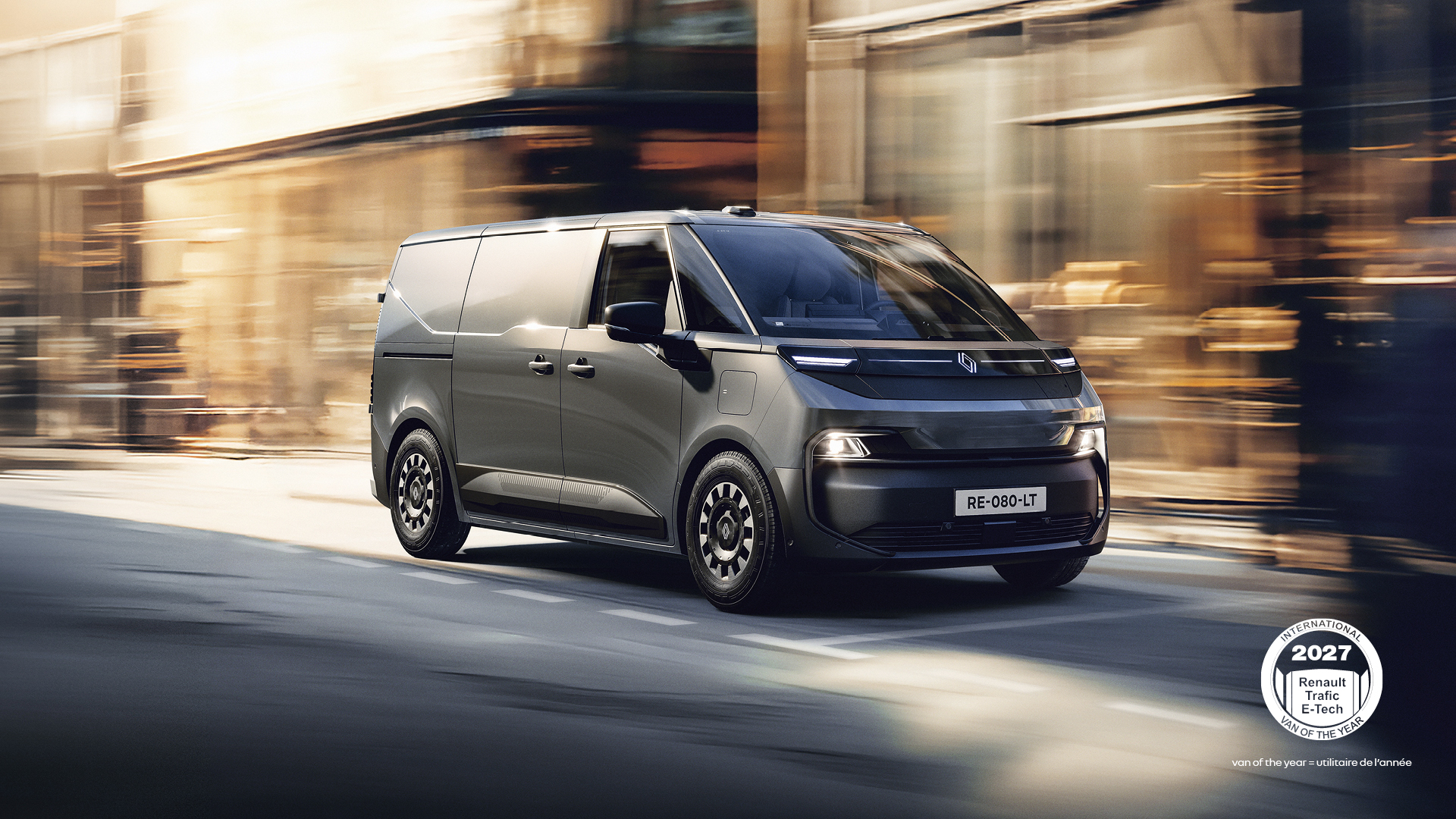
In case you hadn’t heard, the electric revolution is already here with a big push from manufacturers, governments and campaigners to spark an interest in going green with your next van – but which are the best electric vans you can buy in 2027?
The commercial vehicle industry stands at the heart of the UK government’s pledge to achieve a net zero carbon footprint by 2030.
Millions of vans currently commute across British roads but the vast majority of them run on diesel fuel, which emits harmful nitrous oxide (NOx) into the environment.
Manufacturers are not resting on their laurels though, with most vans on the market now available with an electric-powered equivalent alongside their conventional ICE-equipped counterparts.
With many able to extol the benefits of going electric – such as significantly reduced running costs, zero tailpipe emissions and an altogether cleaner environment – there are several good reasons to consider going EV with your next van purchase.
So, with momentum behind electric vans growing, which are the best models on the market right now?
Buy A New Electric Van With Vansdirect
Buying a new electric van with Vansdirect has never been easier or better value for your business
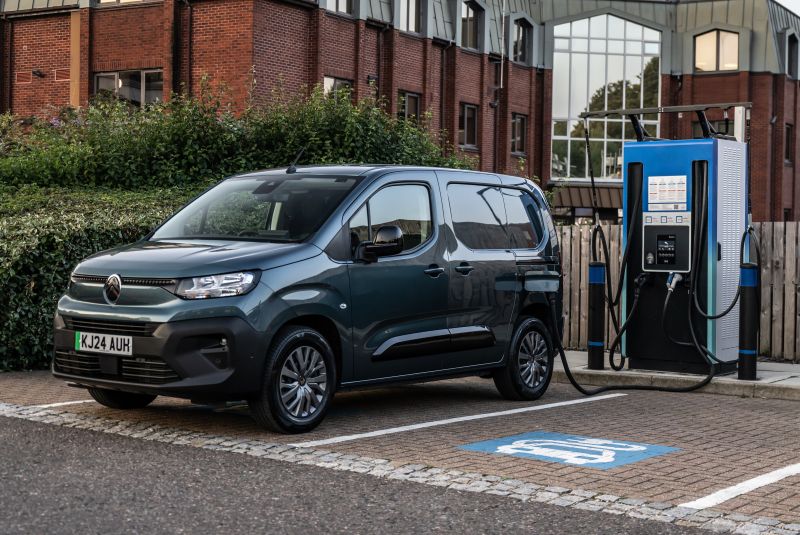
Get the right van deal, right now on the electric van you want, including the Ford E-Transit Custom, Citroen e-Berlingo and Volkswagen ID.Buzz Cargo.
Speak to our expert team today and you could be driving a new electric van sooner than you expected for less than you think.
What Is the Range of an Electric Van?
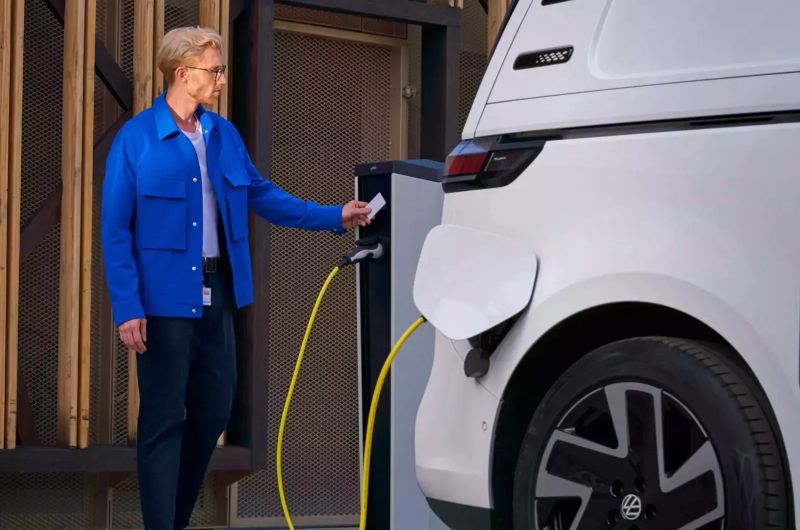
The range of an electric van will vary from model-to-model so it is well worth doing your research when it comes to shopping around for one.
Larger vans can house larger batteries, which generally allows for greater range to be extracted from them. It means some large vans can go more than 250 miles on a full charge cycle.
Small electric vans will generally achieve upwards – sometimes in excess - of 200 miles, while medium electric vans average around 215 miles.
Range figures presented by manufacturers are calculated by measuring an EV’s energy consumption on a dynamotor, which simulates driving cycles – such as stop/start city driving or constant speed driving on a motorway. The returned figures are then averaged to determine the overall WLTP Combined range of an electric van.
It should be noted that there are many factors that affect the range of an electric van beyond the figures quoted by a manufacturer. This includes the payload you’re carrying, the manner in which you drive and the atmospheric conditions.
> Every Electric Van You Can Buy in the UK and their Range
What Makes A Battery Drain Faster?
Driving Style – Hard acceleration and sudden braking will demand more energy from the battery
Driving Environment – Driving at higher speeds requires more energy from the battery compared to low-speed environments so be mindful if you drive regularly on motorways/dual carriageways
Heating/Air-Conditioning – Controlling the interior temperature will impact the battery, as will the use of heated seats and heated screens
Standby Drain – Many electric vehicles remain ‘on’ even when they are idle to allow for monitoring, security and battery management. This is known as a ‘slow drain’.
Extreme Weather – Extreme heat can degrade battery performance, while cold weather can hinder the battery reaching the temperatures required to work efficiently
Weight – An important point for vans, a heavier payload will contribute to the use of more energy and drain the battery
> How to Avoid Range Anxiety When Driving An Electric Van
Top 6 Best Electric Vans in 2027
Renault Trafic E-Tech
Body Styles: L1/H1, L2/H1
Electric Power Unit: LFP "Urban Range", NMC "Long Range" (Electric)
EV Range: up to 279 miles
EV Payload Capacity Range: 1250kg (Electric)
Braked Towing Capacity: 2000kg (Electric)
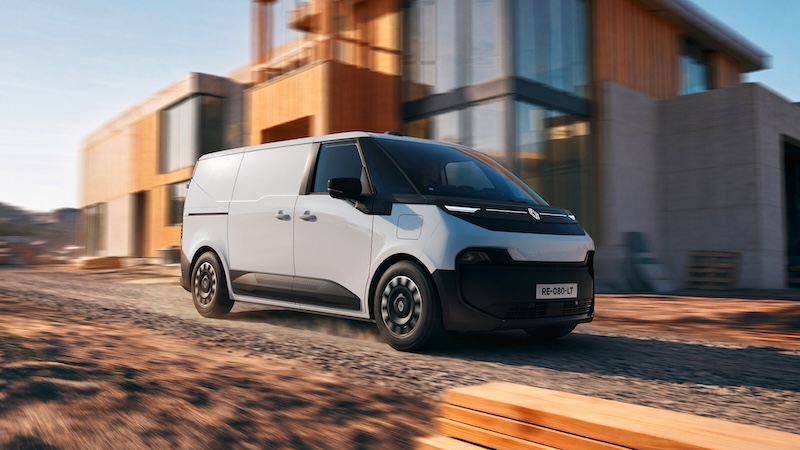
The Trafic name has clocked up more than 2.5 million sales across three generations, as this latest arrival represents a brand new innovation for the fourth.
The Renault Trafic E-Tech is offered in L1 and L2 guises, with load volumes running from 5.1 cubic metres, up to 5.8 respectively, both wide enough to swallow three Euro pallets through the side or rear doors. A rear-mounted motor and underfloor battery pack allow for a trimmed front overhand, resulting in a dinky 10.3 metre turning circle, tighter than a Renault Clio, while the hight stays below 1.9 metres for easy access to car parks.
The Urban Range battery returns around 217 miles, and the Long Range unit is capable of up to 279 miles - both batteries benefit from the new 800V architecture, enabling a 15-80% rapid charge time of just 20 minutes, as well as vehicle-to-load capability for powering tools and equiptment on site.
The payload runs to 1250kg and towing capacity to an impressive 2000kg, with a dual 10-inch and 12-inch screen setup, Google built-in and 18 driver assistance systems keeping the driver comfy, safe and connected.
VERDICT: Rather than a mere update, the reinvented Renault Trafic E-Tech pairs a class-leading range and rapid charging with welcome practicality - a serious new benchmark for medium electric vans.
Kia PV5
Body Styles: L2
Electric Power Unit: 51.5kWh (Electric), 71.2kWh (Electric)
EV Range: 155-miles (51.5kWh), 258-miles (71.2kWh)
EV Payload Capacity Range: 690-790kg
Braked Towing Capacity: 450-750kg
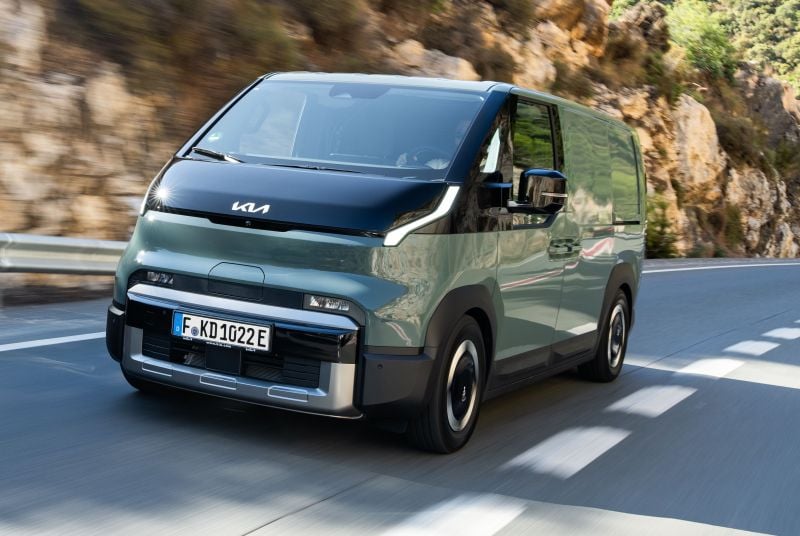
If the commercial vehicle market has been waiting for the halo model that will stimulate interest in electric vans, it might have just found its talisman in the new Kia PV5 Cargo.
It has been a long time since an established automotive giant has expanded into the commercial vehicle market, but Kia - buoyed by its status as a forerunner in the electric car movement - has clearly sensed an opening to do the same in the van sector.
The result is the Kia PV5, the first van from the Korean firm to be built on its new PBV (Platform Beyond Vehicle) architecture, with larger PV7 and PV9 models to follow.
Eschewing convention with dimensions that make it about as long as a Citroen Berlingo XL but almost as tall as a medium van, the PV5 complements its unconventional shape with a similarly quirky design. From here, however, the PV5 capitalises on Kia's proven track record for build quality, a refined driving experience, generous specification and tremendous value.
Two battery sizes are available - a 51.5kWh 'Urban' option aimed at last-mile delivery drivers offering 155-miles of range and a 71.2kWh Long Range model capable of up to an impressive 258-miles... or further than the official figures, if this is anything to go by...
Payload capacity is on a par with smaller-sized vans at 690-790kg, though heavier duty variants will be introduced in the coming years to increase this figure.
VERDICT: If the unusual dimensions work for you and you don't need an extensive payload, the Kia PV5 is an impressive debut in the commercial sector. Refined, well-thought out, generously equipped and superb value even before you consider the penny-pinching electric running costs.
Ford E-Transit Courier
Body Styles: L1/H1
Electric Power Unit: 43kWh (Electric)
EV Range: up to 181 miles
EV Payload Capacity Range: 683-698kg (Electric)
Braked Towing Capacity: 750kg (Electric)
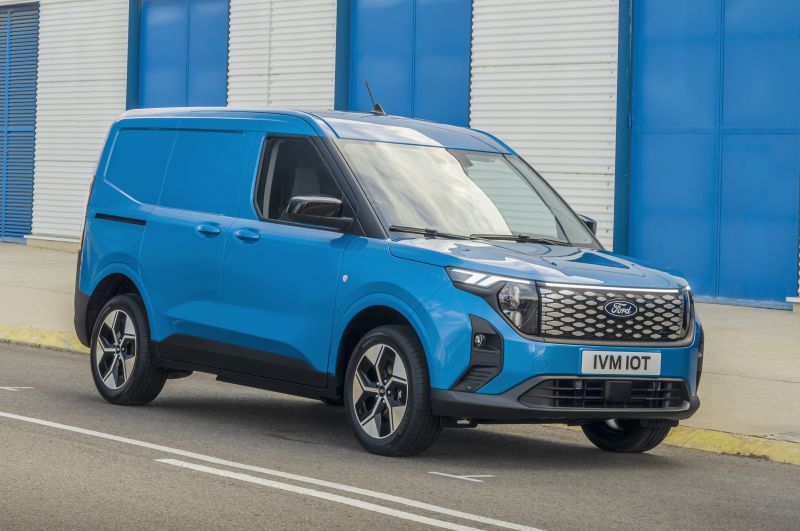
Whereas it is commonplace for electric vans to demand a compromise in terms of payload, the Ford E-Transit Courier differs by offering its most generous weight capacity – a competitive 698kg - in electric guise.
It helps that the E-Transit Courier is one of the most accomplished small electric vans in the class, its light weight, responsive steering and instant acceleration making it a boon around town.
While it is physically smaller than the sister Ford Transit Connect, expert packaging ensures it only gives away scant millimetres to its sibling while remaining easier to drive and park. Moreover, the Connect doesn’t come as a pure electric van.
VERDICT: The most engaging small electric van to drive in town, the E-Transit Courier feels responsive, is sufficiently practical, offers big van standard equipment and costs pennies to run.
Ford E-Transit Courier Van Deals
Volkswagen ID.Buzz Cargo
Body Styles: L1/H1
Electric Power Unit: 59kWh, 79kWh (Electric)
EV Range: up to 277 miles
EV Payload Capacity Range: 607-712kg (Electric)
Braked Towing Capacity: 1000-1800kg (Electric)
If commercial industry had to have ‘halo’ model that could push the good message electric, then the Volkswagen ID.Buzz Cargo is surely that van.
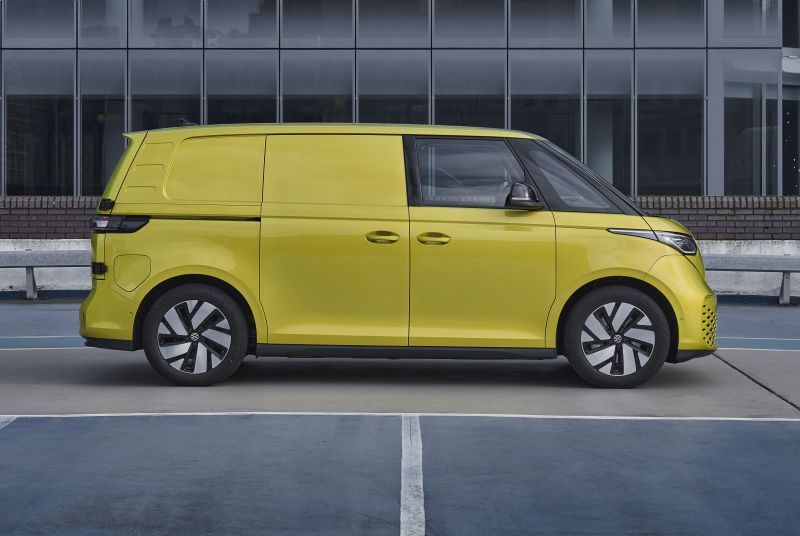
Derived from the VW ID.Buzz passenger vehicle, the removal of seats and rear windows doesn’t dilute the funky, retro-infused styling that draws spiritual inspiration from the VW ‘Campervan’ of the 1960s.
If you need your van to act like a van then the ID.Buzz Cargo’s relatively small cargo bay and modest payload relative to other models in the medium van class – not least its Volkswagen Transporter sibling – means it probably isn’t the van for you.
However, it helps that the ID.Buzz Cargo is van that was conceived from the beginning to be electric, as demonstrated by certain models achieving a full 277-miles of range, while there are is even a 335bhp, four-wheel drive version available too.
Better yet, the ID.Buzz Cargo’s eye-catching looks ensures that those heads could be turning onto your business liveried on the side. That makes it quite the investment opportunity.
VERDICT: If you don’t need the space and payload of a Transporter, the Volkswagen ID.Buzz Cargo’s eye-catching looks, class-leading range potential and all-round good vibes make it a very attractive proposition.
Volkswagen ID.Buzz Cargo Van Deals
Citroen e-Berlingo
FIAT E-Doblo
Peugeot E-Partner
Vauxhall Combo Electric
Body Styles: L1/H1, L2/H1
Electric Power Unit: 52kWh (Electric)
EV Range: up to 215 miles
EV Payload Capacity Range: 691-781kg (Electric)
Braked Towing Capacity: 750kg (Electric)
If you’re in the market for a small van, there is a strong argument for making this the time to adopt electric power.
Electric will significantly reduce your running costs while producing zero exhaust emissions, while an EV won’t be subject to the higher clean-air zone tariffs applied to diesel and petrol models in the cities and towns where most small vans reside.
Better still, if you do happen to complete a lot of stop-start, city centre driving, electric vans are more efficient than diesel, offer instant acceleration and have energy harvesting potential too.
So, a small electric van makes sense – but which is the best? Well, beyond the Ford E-Transit Courier, we also recommend the Stellantis quartet comprising the Citroen e-Berlingo, FIAT E-Doblo, Peugeot E-Partner and Vauxhall Combo Electric.
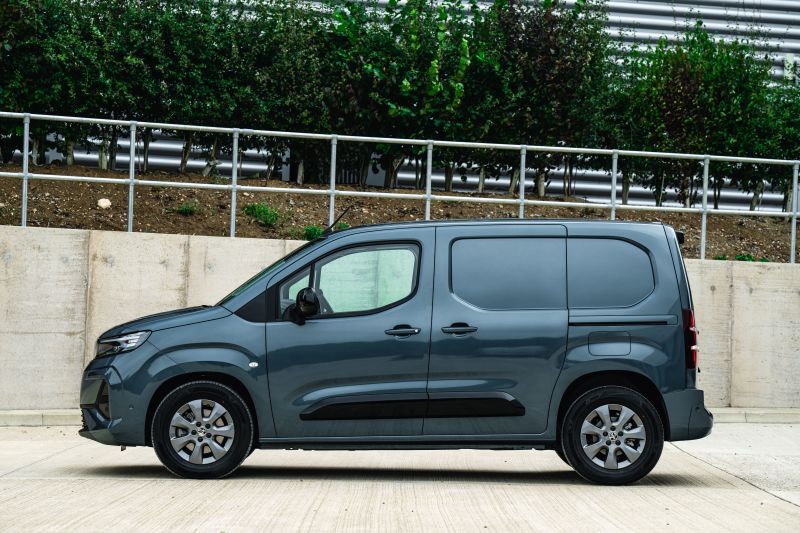
All four vans are accomplished in their own right, offering practical cargo bays, impressive payload capacities and brimming with clever versatile touches. Add electric into the mix and you have the potential to go a class-leading 215-miles on a single charge.
VERDICT: They might look very conventional on the outside, but the Stellantis quartet of small vans simply go about doing their job (which they do very well) but just happen to be electric and frugal too.
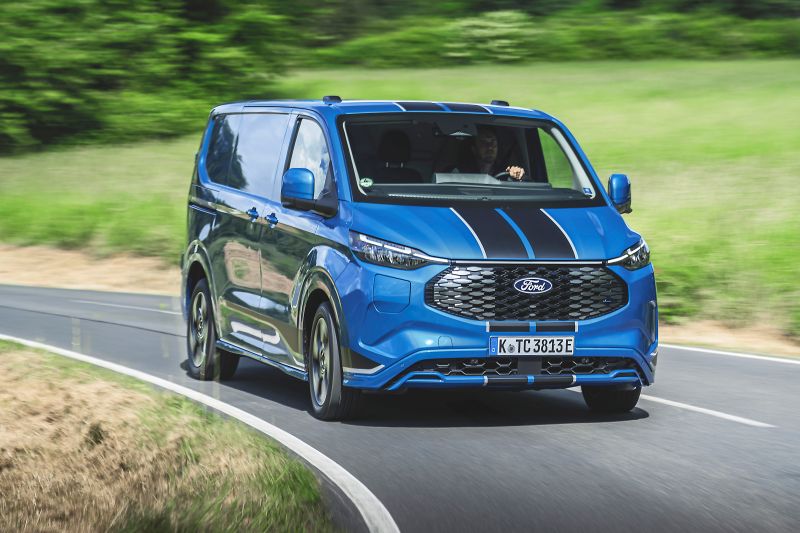
Ford E-Transit Custom
Body Styles: L1/H1, L2/H1
Electric Power Unit: 65kWh 136 (Electric), 65kWh 218 (Electric), 65kWh 285 (Electric)
EV Range: up to 209 miles
EV Payload Capacity Range: 1036-1088kg (Electric)
Braked Towing Capacity: 2300kg (Electric)
It stands to reason that the best-selling UK van – the Ford Transit Custom – has gone electric as it seeks to transfer its many talents as a medium van into a greener package.
Dubbed the Ford E-Transit Custom, it offers a competitive range of up to 209-miles while retaining the same car-like handling, huge cargo bay and smartly appointed interior of its conventional sibling.
Better still, it is available with three different power outputs going all the way up to 285PS, which is available with the performance orientated MS-RT trim.
VERDICT: If you’re looking to reduce running costs and adopt a greener tool for your business, the Ford E-Transit Custom remains a standard-setting van, just even more frugal.
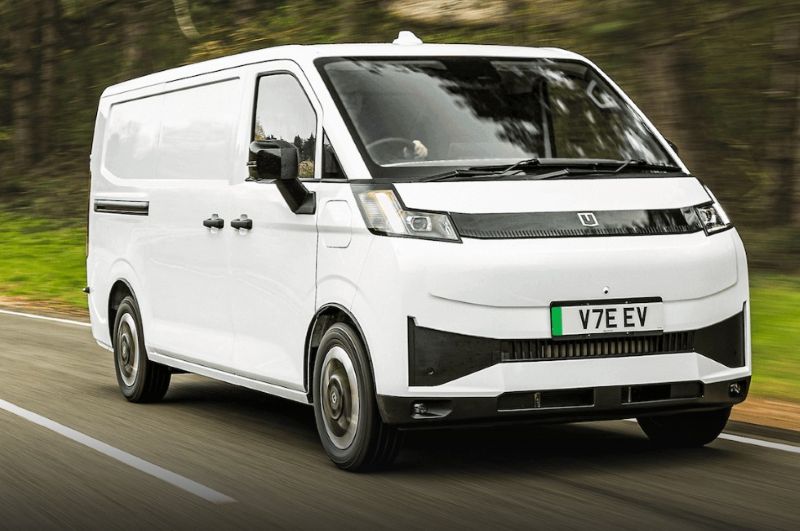
Farizon V7E
Body Styles: L1/H1
Electric Power Unit: 50kWh (Electric), 65kWh (Electric)
EV Range: up to 204 miles
EV Payload Capacity Range: 1208-1338kg (Electric)
Braked Towing Capacity: 1000kg (Electric)
Having made its mark with the well-received SV, the newcomer Farizon isn't relaxing just yet, pushing further into the urban delivery segment with the Farizon V7E.
Sitting on the same modular platform as the SV, the V7E is just a touch smaller than the L1 Ford E-Transit Custom, but the van's clever architecture - a short front overhang, low centre of gravity and space-saving steering technology - frees up a class-leading 2730mm load length and a mammoth 6.95-cubic metre load area, or 2850mm and even more space with the optional extendable bulkhead.
Two batteries are on offer with the V7E, with the smaller 50kWh unit returning 149 miles of range and the larger 65kWh battery extending that to 204 miles.
Both batteries comfortably clear the one-tonne payload mark, while a tight 12-metre turning circle and 360-degree cameras make the V7E easy to manoeuvre around town.
VERDICT: Slim, tall and enormously practical for its footprint, the Farizon V7E proves that delivery vans don't need to compromise on space to stay manoeuvrable in the city streets.
Honorable Mentions
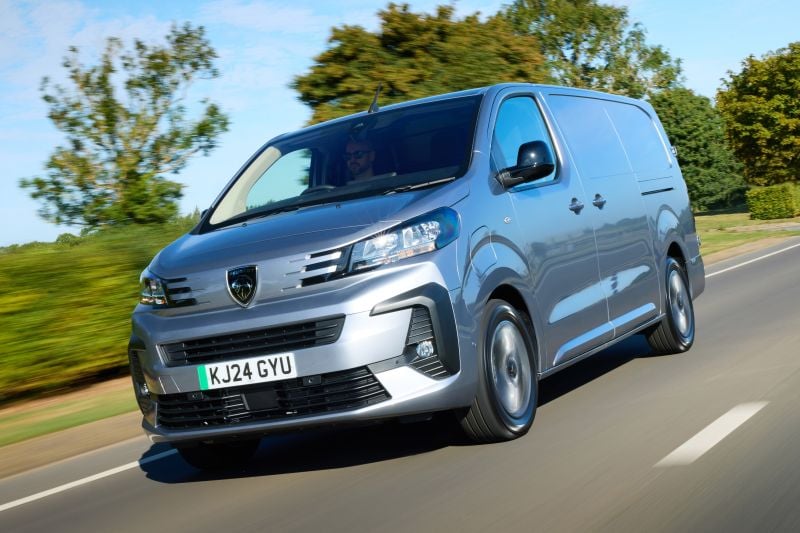
Citroen e-Dispatch
FIAT E-Scudo
Peugeot E-Expert
Toyota Proace Electric
Vauxhall Vivaro Electric
Capable of up to 230-miles of range, the Stellantis (+Toyota) medium van quintet make for very cost-effective options in electric guise.
Easy-to-drive, spacious and offering a generous payload even in electric spec, the Citroen e-Dispatch, FIAT E-Scudo, Peugeot E-Expert, Toyota Proace Electric and Vauxhall Vivaro Electric are among the best conventional electric vans on the market.
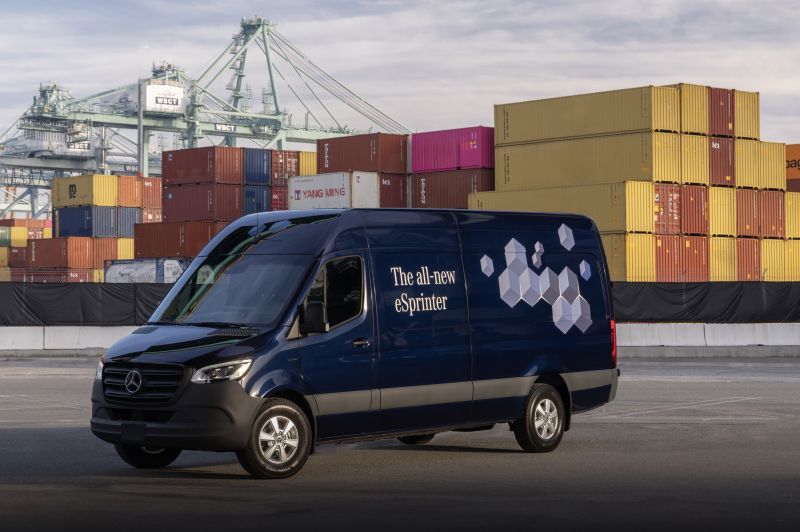
Mercedes-Benz eSprinter
A big overhaul of the Mercedes-Benz eSprinter line-up saw a much larger 113kWh battery added fairly-recently.
Capable of up to 271-miles of range, the flagship eSprinter is bettered only by the new Renault Master/Nissan Interstar in terms of electric useability.
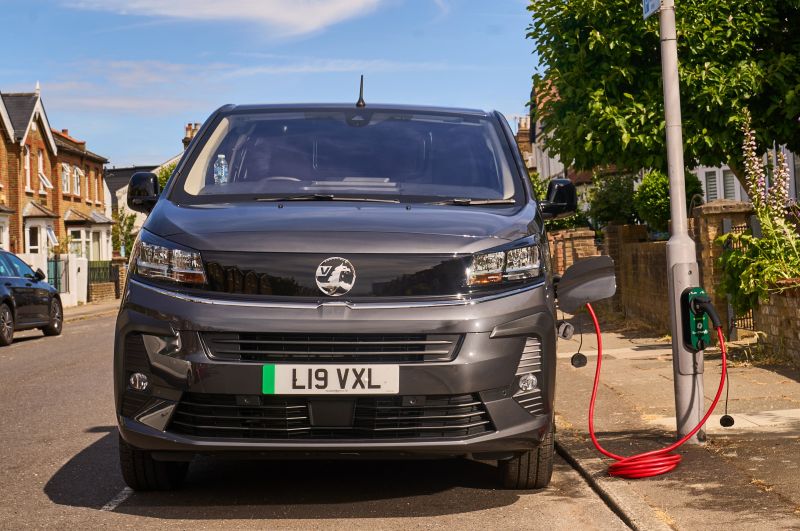
What Would Happen If All UK Vans Were Electric?
There are currently 5.1 million vans on the UK’s roads and they are responsible for 80% of all domestic freight and contribute a whopping £13.5 billion to the economy each year.
These vans make up 14 per cent of all vehicles on UK roads but higher mileage and energy demands make them responsible for more than a third of all road transport CO2. This translates to 12% of the UK’s entire carbon footprint.
Therefore, the scope for change is significant to the UK’s environmental credentials. In fact, if every commercial vehicle on the road was swapped out for an electric equivalent, the UK would deliver CO2 savings greater than the total carbon footprint of Sweden!
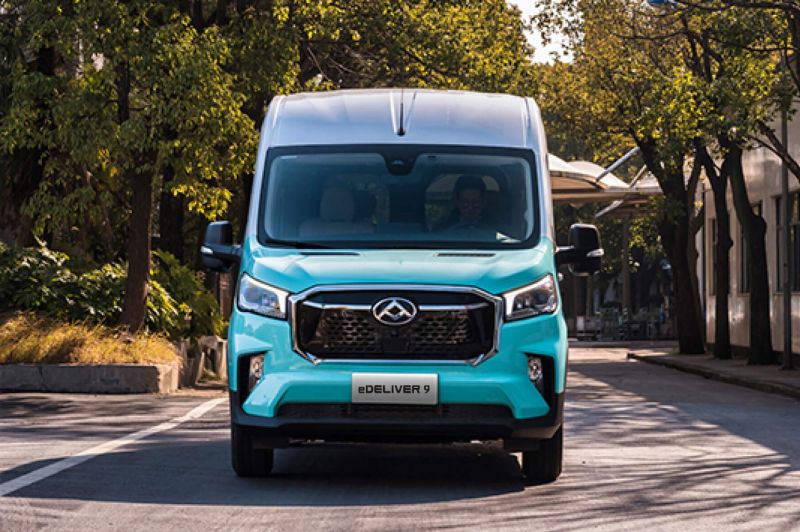
How To Maximise Battery And Combat Range Anxiety
Adapt Your Driving Style
Smooth Driving: The more aggressive you drive – such as harsher acceleration or heavier braking – the more energy you’ll use, particularly as you’ll reach faster speeds quicker due to linear acceleration.
Consistent Speed: Be mindful of using the accelerator more smoothly and progressively, while you should try to maintain constant speed as this is more efficient than frequent acceleration and deceleration.
Keep To Speed Limits: It is useful to remember that the WLTP (Worldwide Harmonized Light Vehicles Test Procedure) range figures quoted by manufacturers will be based around a combined cycle within the speed limit. If you stick to speed limits, it will be easier to predict your range in line with what is suggested by manufacturers.
Utilise Energy Conserving Features
Eco-Mode: Many electric vehicles have on-board features to assist with maximising the efficiency and durability of your battery. These include so-called ‘Eco’ modes, which can limit some functionality within the vehicle automatically – such as air-conditioning – or reduce the sensitivity of the accelerator.
Regenerative Braking: This is a common feature on electric vans. This involves an EV van recapturing energy during deceleration – foot off the accelerator but not on the brake pedal – from the friction generated in the process of slowing down. Some vehicles offer different levels of regeneration with some offering higher levels of friction for a higher rate of recapture. It is even possible to adapt the settings to use regenerative braking to bring a car to a stop without using the brake pedal at all.
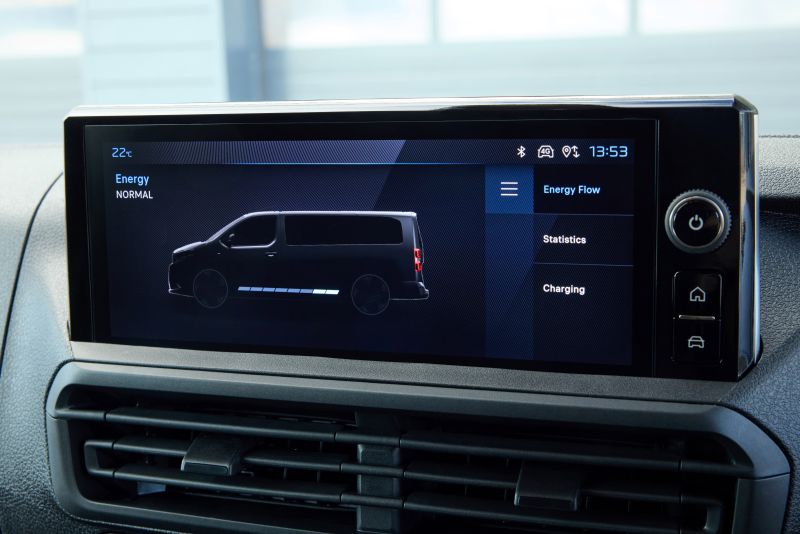
Heat Pump: Some models may also offer the option of a heat pump. This is a device that uses waste heat from the vehicle’s components that can be used to heat the interior for instance. By allowing the heat pump to take the responsibility of heating the interior away from the battery, it can therefore greatly improve range.
Planning Ahead
Lighten The Load: While the very definition of running a van might make carrying heavy cargo an unavoidable factor, a lot of range can be recuperated by removing unnecessary weight where possible from the load bay. On the other hand, however, if you are able to run a van without any load, the comparatively light weight will improve range significantly.
Map Out Your Journey: Be mindful of the route you might be taking, particularly if you are embarking on a long journey. For instance, choose the journey that might be more frugal or more direct. Motorways are more direct and often quicker in terms of journey time but they might be further in mileage and prompt you to drive at a higher speed than if you took a single-carriageway A-road.
Recharging At Strategic Locations: Avoid range anxiety entirely by scheduling stops along the way. If you – as many will – plan to use motorway service stations anyway, doing so is a good opportunity to use one of the rapid chargers in the car park while you head inside to spend a penny or get some food. Embrace the break and extend your stay out to around 30mins and your electric van will be on the way towards an 80% charge.
Check The Weather: While you shouldn’t delay a journey because of the weather alone – hot or cold – if you plan ahead you could heat or cool the van interior down before you set off and while it is still connected to a charger. Try not to use the air-conditioning in merely mild conditions.