


It is Time to Upgrade to the Right Van for Your Business
Summer tends to separate businesses into two camps. For some, it's the busiest stretch of the year, with every van on the fleet earning its keep. For others, it's a rare lull – a window to step back and plan rather than react. Either way, your vans end up under a brighter spotlight than usual.
That makes summer a useful moment to ask a question that's easy to put off the rest of the year: is the van you're driving still the right one for the job you're actually doing?
It's a question that matters more than it used to. The UK van market has moved on from the old small-medium-large hierarchy that made buying decisions reasonably straightforward. Electric architecture in particular has reshaped howa conventional van is packaged, so considering your latest options now means thinking less about the size bracket you've always bought from, and more about what your routes, loads and operation really demand.
Why the Old Van Categories Don't Tell the Whole Story Anymore
Small, medium and large vans have always been a useful shorthand, but the lines have blurred. Some EV vans now offer load space that rivals vans from the class above them, simply because there's no engine block dictating the shape of the front end. Others borrow underpinnings from passenger cars, trading outright capacity for comfort and running costs that suit a different kind of job entirely.
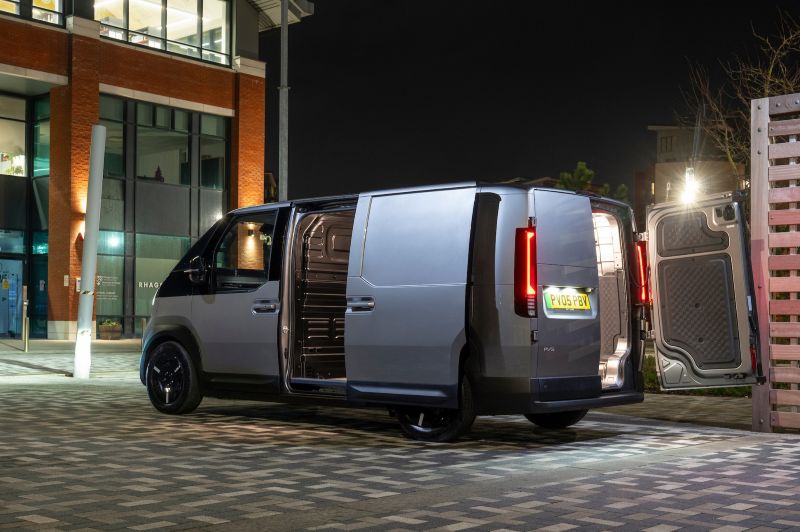
Take the Kia PV5 UK model as one of the standout examples. As a new Kia van built on Kia's dedicated Kia PBV (Platform Beyond Vehicle) architecture, the Kia PV5 range spans three body sizes – compact L1/H1, mid-size L2/H1 and the substantial L2/H2 – without ever feeling like a single design stretched to cover every bracket.
The smallest L1/H1 offers 4.0 cubic metres of load space and up to 800kg of payload from a footprint that's genuinely manoeuvrable around town, while the L2/H2 tops out at 5.2 cubic metres. This Kia electric van is proof that a single nameplate can now offer a genuine range of choice that simply didn't exist a few years ago for vans in the UK.
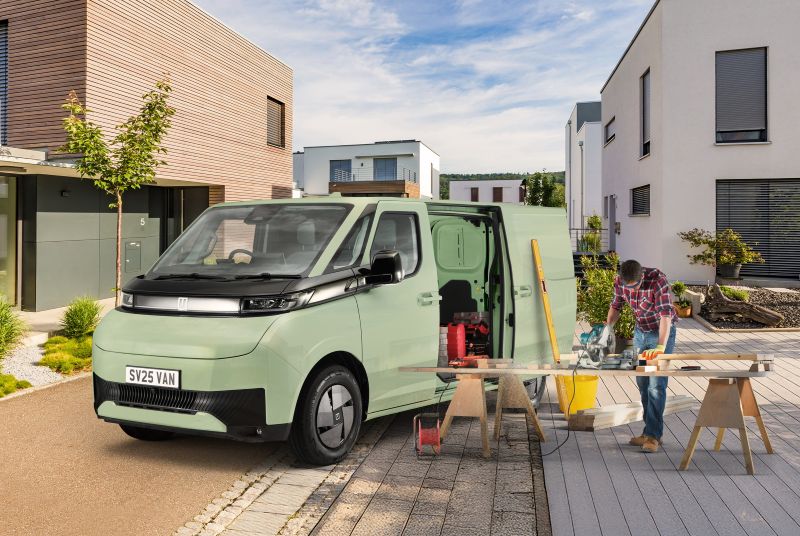
The Farizon SV tells a similar story. Geely's commercial vehicle arm has built an EV van spanning L1/H1 right through to L3/H3, with a choice of three battery sizes – 67kWh, 83kWh or 106kWh – depending on how far you need to travel between charges. It's already picked up serious industry recognition, finishing as a top finalist at the International Van of the Year 2026 awards, and a recent refresh has added a six-way adjustable driver's seat, physical climate controls and an entry-level Core trim.
What both vans demonstrate is the same underlying point: fit isn't really about which category you've always shopped in. It's about whether the dimensions, access, running costs and payload capacity of your van matches what your business does with it day-to-day.
Matching the Van to the Job, Not the Other Way Round
It's worth asking a few honest questions about how your current van is used, rather than how it was specified when you bought it.
Do your drivers spend more time getting in and out than driving? A lower load floor and easier step-in height – a trait increasingly common on EVs, since there's no transmission tunnel or engine bay dictating the platform – can speed up multi-drop work.
Does the job call for height rather than length, or vice versa? Plenty of operators end up with vans sized for an occasional big job rather than the average one, paying a manoeuvrability and payload penalty on every other day of the year.
And is your running cost structure still working for you, with fuel and maintenance costs continuing to climb? It's a question worth asking if you're chasing the most economical van for your operation, rather than simply the cheapest one to buy.
For businesses that need genuine car-like refinement without giving up commercial practicality, the UK Ford Explorer Van is worth a look – one of the more interesting Ford vans to land in the UK this year. This new Ford Explorer Van is based on Ford's Ford Explorer electric SUV, the latest in a new wave of car derived vans returning to the market to blur the lines between commercial vehicle and optimised company car.
The Explorer Van features a 79kWh battery that is good for up to 374 miles (WLTP) of range, while rapid charging takes it from 10-80% in around 25 minutes, plus 650kg of payload and 1,200kg towing capacity. As a Ford Explorer EV, it's built for businesses replacing pool cars or covering longer distances where comfort and range matter as much as cargo volume.
At the other end of the spectrum, the Ford Ranger PHEV solves a different problem: how to bring down running costs on a pick-up without compromising what a pick-up needs to do. As one of the new Ford Ranger UK options now available, its plug-in hybrid powertrain pairs efficient electric running with petrol backup to maintain a healthy 1,043kg payload, putting it firmly among conventional diesel rivals while offering lower day-to-day costs for businesses mixing short electric-only trips with longer hauls. It remains one of the most capable Ford vans for mixed-use trades in the UK market.

Diesel or Electric: How Each Copes with a Hot Summer
Summer also raises a question that's specific to powertrain, not just size: how well does your van actually cope with heat?
It's a fair trade-off rather than a one-sided argument. A conventional engine generates real heat as a byproduct of combustion, and on a scorching day in heavy traffic, with reduced airflow over the radiator, the cooling system must work harder than usual to keep up.
That's a familiar weak spot for petrol and diesel vans doing stop-start urban work in the height of summer. Electric vans sidestep that particular problem, since there's no engine generating heat at every junction. There's a genuine efficiency upside here too: an EV van's motor simply switches off when stationary, so air conditioning at a standstill isn't accompanied by the wasted fuel of an idling engine, the way it would be in a petrol or diesel van.
Diesel vans are still, of course, the favoured choice in the commercial vehicle market on the strength of their superior fuel economy and total mileage range. However, with an increasing number of towns and cities enforcing strict Ultra Low Emission Zones – with tolls to pay for those that don’t meet the criteria – and petrol prices proving volatile, there is a lot of value in doing your sums to consider the bigger picture.
The last couple of years have seen a major shift in the way commercial vehicle manufacturers develop models and this will continue into the near future. With this in mind, it is therefore prudent to consider the future of your business and engage in some research to discover whether there is a van or pick-up truck out there that will now meet your specific needs that may not have been there previous years.
A Quick Comparison: Models Worth Considering
| Model | Best Suited For | Powertrain | Payload | Load Space | Standout Feature |
| Kia PV5 Cargo | Last-mile delivery, urban multi-drop | ELectric (51.5kWh or 71.2kWh) | Up to 800kg | 4.0-5.2 cu m | Low load floor, three body sizes from one platform |
| Farizon SV | Fleets wanting flexible sizing and value | Electric (67kWh, 83kWh or 106kWh) | Up to 1,350kg (variance by body size | 6.95 - 13.0 cu m | Wide side-door entry, low load floor, payload monitoring system |
| Ford Explorer Van | Company or Pool Car, long-distance reps with need for load carrying | Electric (79kWh) | 650kg | 1.46 cu m | 374-miles range, 25-min rapid recharge |
| Ford Ranger PHEV | Off-road, towing, mixed-use trades | Plug-in Hybrid | 1,043 | N/A (Doubel Cab, 5 Seats) | Lower running costs without compromising on payload and towing |
Why Summer Is the Right Time to Sort This Out
There's a practical reason to have this conversation now rather than waiting. Demand for vans tends to spike between May and September, whether that's businesses gearing up for their busiest months or simply more vehicles changing hands across the industry.
Meanwhile, factory order lead times can stretch from six to fourteen weeks depending on the model and current demand, while an in stock van can typically be on your drive within days.
Vansdirect is committed to ensuring we have broad range of vans across a variety of powertrains, sizes and body types in stock and ready straight away. With free delivery to anywhere on the UK mainland, it therefore limits harmful downtime for your business.
If your business has a quieter spell this summer, it's a natural moment to review your fleet and order well ahead of when you'll actually need the vehicle. If summer is your busiest period, the same logic applies in reverse: sort your next van before the pressure of a breakdown or a missed contract forces a rushed decision.
Talk to the Van Experts at Vansdirect
Whatever shape your business takes this summer, our team can help you work out which van actually fits the job – not just the brochure. We carry a diverse range of vans to suit different operational needs, from small vans for nimble urban work through to medium and large vans built for bigger loads, alongside a growing electric range for businesses ready to make the switch. Our current line-up of new vans to lease is regularly updated, so if you're after the best vans UK has to offer this summer, it's worth checking back often.
Many of our most popular models are in stock and ready to deliver, with free delivery available across UK mainland – so there's no need to let a long lead time dictate your next move. Whether you're after a new van for sale today or simply comparing the latest new van deals, our team can talk you through the options.
Not sure where to start? Get in touch with our team for impartial advice on the right van for your business, or explore our leasing options if a fixed monthly cost suits your cash flow better than an outright purchase. And if you'd simply rather buy a new van outright, we're just as happy to help you find the right fit.