


Mercedes-Benz Vito vs Volkswagen Transporter: Which is the Best Medium Van?
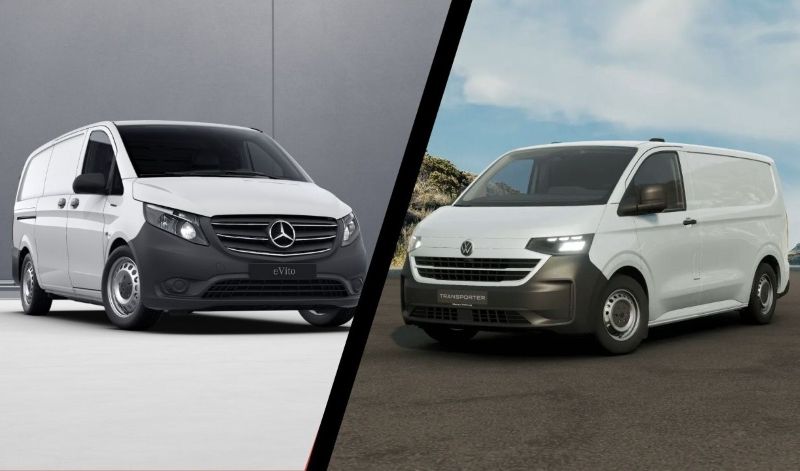
There are some fierce rivalries in the van industry, but few head-to-heads are as doggedly fought as the tussle between Mercedes-Benz and Volkswagen.
Vans Being Compared
Mercedes-Benz Vito - 2.0CDTI 114 Pro – Panel Van – L3/H1
Volkswagen Transporter - 2.0TDI 150PS Commerce – Panel Van – LWB/H1
The German powerhouses have been mainstays of the commercial vehicle sector for decades and are responsible for some of the industry’s most famous and enduringly popular vans.
With success comes rivalry though, Mercedes-Benz and Volkswagen going toe-to-toe for supremacy in each of the key small, medium and large van classes.
They haven’t always locked horns though. In fact, the manufacturers have previously collaborated on the Mercedes-Benz Sprinter and Volkswagen Crafter, but today they have returned to their individual halves.
For this match up, we’re turning attention to their mid-range offerings, the Mercedes-Benz Vito and Volkswagen Transporter.
While they are two vans at different points of their life cycle – the Vito due to be replaced in the next year, while the Transporter has just begun its seventh-generation era – they are two vans that complement their practical load bays and generous payloads with subtly satisfying badge kudos.
So, when stacked up against one another, which of these German load luggers is the smart purchase?
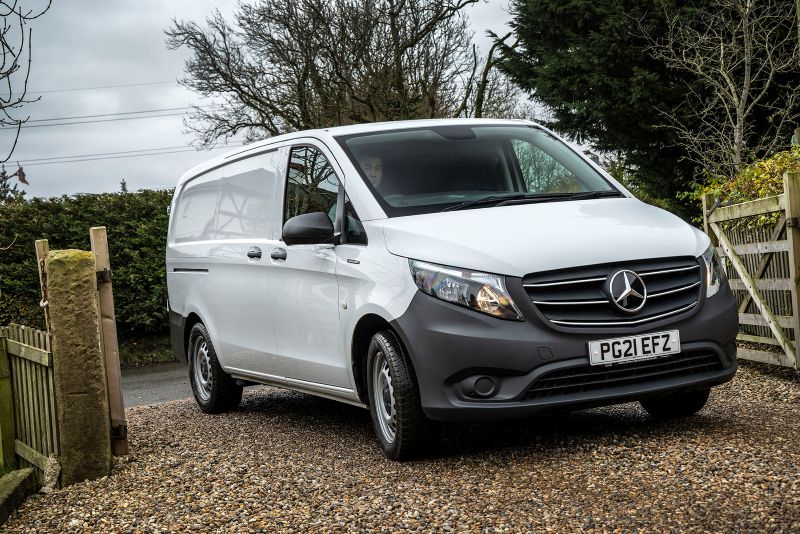
Lease the Mercedes-Benz Vito if...
- You want to travel longer distances in comfort
- You’d benefit from a larger L2 specification
- You’re after a van with a bit of performance to spare
- You prefer more conventional dashboard designs
See Mercedes-Benz Vito Van Deals
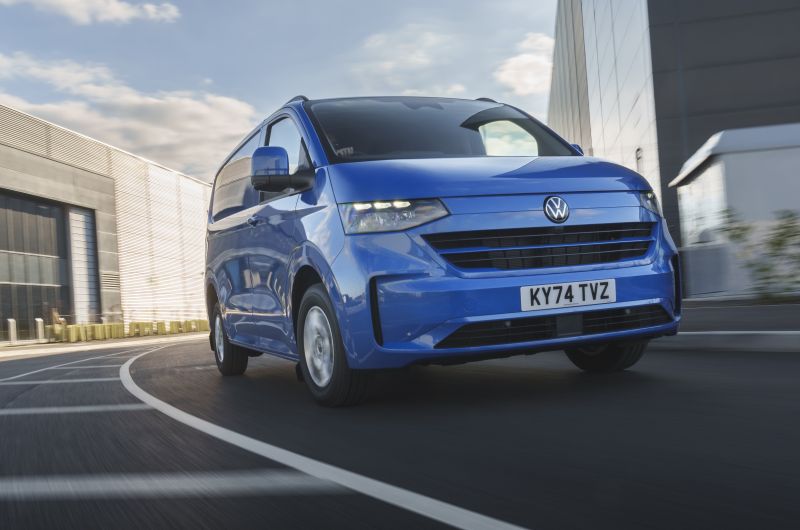
Lease the Volkswagen Transporter if...
- You need outright payload and carrying capacity
- You’re interested in an electric medium van
- You want a van that is refined and even enjoyable to drive
- You want lots of powertrain, trim and specification choices
See Volkswagen Transporter Van Deals
Lease A Mercedes-Benz or Volkswagen Van with Vansdirect
Leasing a new Medium Van with Vansdirect has never been easier or better value.
Get the right van at the right deal, fast and hassle-free with the best medium van leasing deals available across a wide array of models, including the Mercedes-Benz Vito and Volkswagen Transporter
Speak to our expert team today and you could be driving a new van for less than you expect.
Vito vs Transporter: Cargo Load, Dimensions & Practicality
When it comes to buying a new van, it pays to do your research and if you have been poring over statistics, brochures and (hopefully) Vansdirect’s website, there is a strong chance you’ll have picked up on a fair bit of useful terminology.
In the context of vehicle dimensions, it’s likely you’ve spotted L1/L2/L3 and H1/H2/H3 et al. and you’ll likely know this helps determine the range of length and height a van might be.
However, it should be known that it officially refers to ‘load length at floor’ and that not every manufacturer uses this key when referencing their models. Here for instance, the Volkswagen Transporter is described as SWB and LWB (short wheelbase and long wheelbase), though they are generally considered L1 and L2 (in a single H1 height).
Somewhat confusingly, however, the Mercedes-Benz Vito is labelled as L2 and L3, even though its physical lengths are broadly representative of L1 and L2 compared with other models in the medium van space.
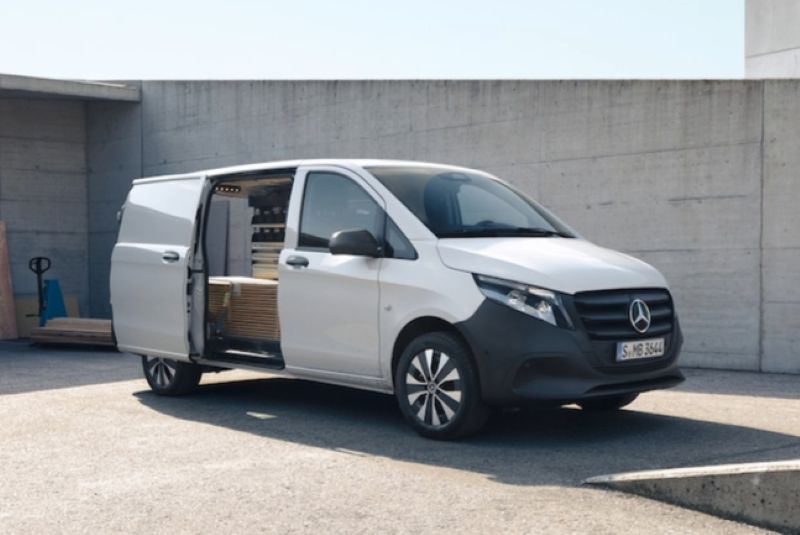
For ease of comparison, the Vito L2 is the equivalent of the Transporter SWB and the Vito L3 is the equivalent of the Transporter LWB.
Here we compare the Vito L3 with the Transporter LWB since they are closest in outright length – 5370mm for the former, 5450mm for the latter.
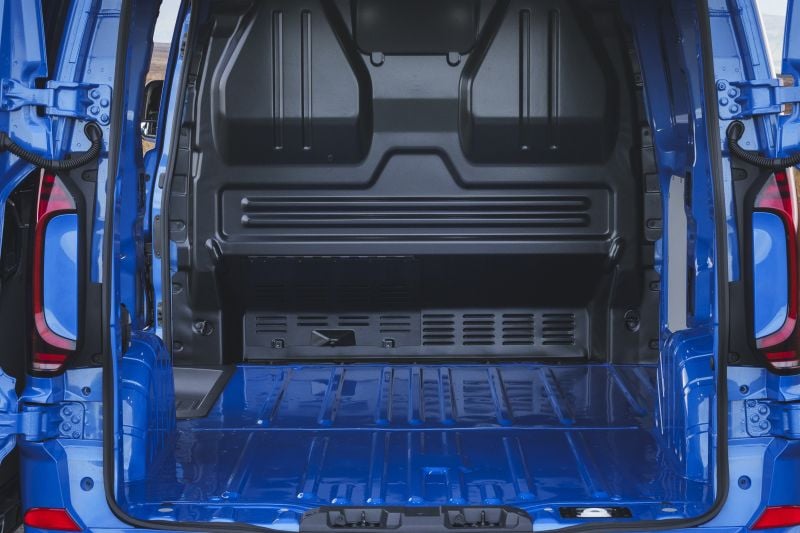
With longer external dimensions, the Transporter LWB is perhaps inevitably also larger inside, offering 6.8 cubic metres of load space, compared with the Vito’s 6.6 cubic metres.
That said, it comes down to surprisingly small details to explain why the Transporter LWB is the larger van overall.
In fact, the Vito overturns that external deficit on the inside with a longer load length than its rival at 3061mm (Transporter, 3002mm).
However, this is down to it doing away with the conventional bulkhead between the cabin and the load bay, so it’s up to you whether you’d prefer to trade the security that comes with a proper bulkhead for a slightly longer load bay.
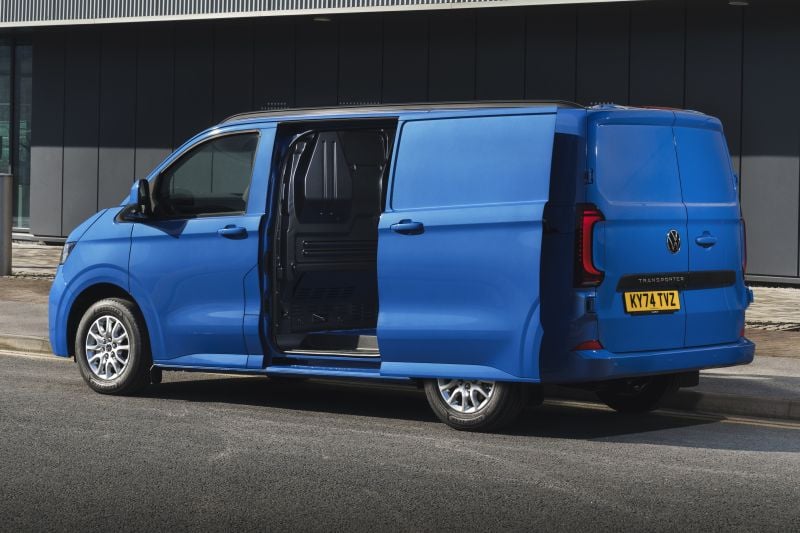
The Vito also has a taller load area, but the Transporter offers superior packaging with its wider load bay, not least the measure of space between the wheelarch housings. At this point, the Transporter measures 1392mm, whereas the Vito is only 1270mm.
It all adds up to the Transporter having the bigger load bay in their respective larger body types, though go for the smaller of the two models and the ‘L2’ specification Vito’s 6.0 cubic metres of space is superior to the SWB Transporter at 5.8 cubic metres.
Vito vs Transporter: Weights, Loads & Towing
While there are wins apiece when it comes to dimensions, the Volkswagen Transporter establishes itself as the superior medium van over the Mercedes-Benz Vito if payload is your primary consideration.
For this comparison, we are pitching the Volkswagen Transporter 2.0TDI 150 Commerce LWB against the Mercedes-Benz Vito 2.0 CDTI 114 Pro L3.
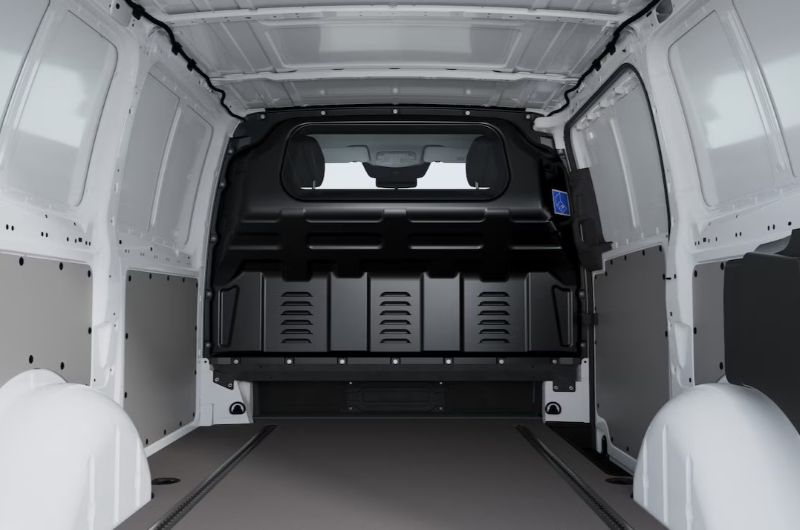
As a direct comparison for maximum payload, the Transporter offers class-leading figures with this particular model capable of hauling a generous 1230kg, versus the Vito’s 860kg capacity – so around 30 per cent more in favour of the Volkswagen.
It’s a similar story with alternative engines and trims. Indeed, while other models offer varying payload capacities on both sides, the Vito’s maximum carrying capacity is 888kg, while the Transporter can be had with up to 1280kg.
Similarly, the Transporter has a greater towing capacity at 2800kg, compared to the Vito’s 2500kg.
It’s also worth noting that the electric Volkswagen e-Transporter offers payload capacities in the range of 766 and 1229kg, while the Mercedes e-Vito ranges between 783 and 794kg.
Vito vs Transporter: Engine, Performance & Running Costs
On the engine front, both the Mercedes-Benz Vito and Volkswagen Transporter are available with 2.0-litre turbodiesel engines, with three power output options each.
Here we compare the Vito 2.0-litre CDTI 114, the entry-level engine in its line-up that generates 134bhp, while the Transporter 2.0-litre TDI 150 is mid-range and generates 148bhp.
In terms of pure performance, there is very little to separate the two vans, though the Vito will reach 0-62mph quicker than the Transporter, despite the deficit in outright power.
The Transporter 2.0 TDI 150 has the greater pulling power at 360Nm of torque compared with the Vito’s 330Nm, which might prove a determining factor if you’re likely to be pulling more payload weight on a regular basis.
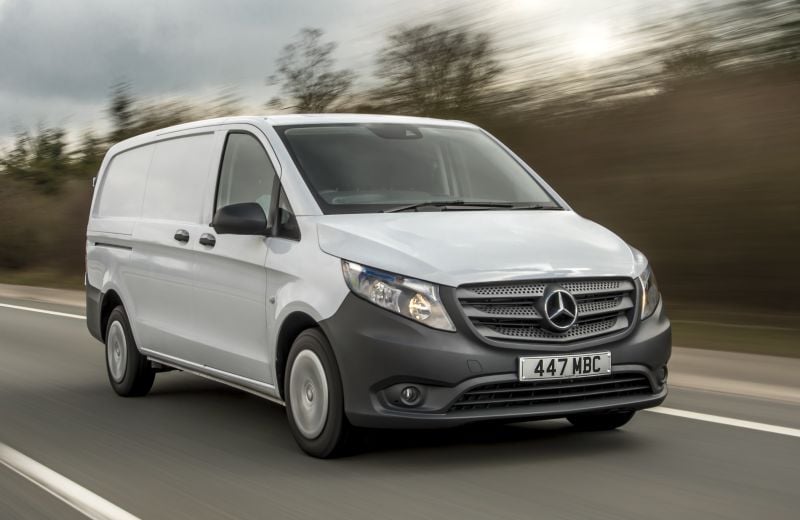
For those keeping an eye on their running costs, the Vito 114 is the more economical and the cleaner of the two models.
On a combined cycle, the Vito 114 should return more than 40mpg and generate 185g/km of CO2 emissions. The Transporter by contrast delivers 37.2mpg fuel economy and 201g/km of emissions.
Looking across the rest of the ranges, the Vito is among the more powerful of the medium vans with 116 CDTi (161bhp) and 119 CDTi (188bhp) engines also available.
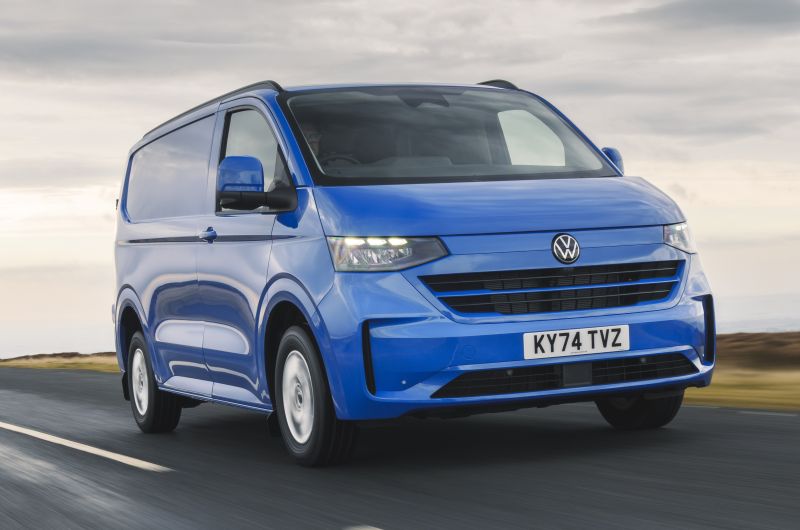
The extra power and performance from the Vito complements a driving experience that favours long distance travellers, particularly on the motorway. Already one of the more car-like vans to drive with well-damped cabin, the punchy engines allow for brisk progress up to highway speed limits, all without noticeably hampering fuel economy.
The Transporter – which is also offered with 108bhp and 168bhp versions of its 2.0-litre turbodiesel engine – shares its running gear with the Ford Transit Custom and therefore shares many of its positive traits.
This includes stable, even involving handling that makes the Transporter a doddle to drive at low speeds before the steering weights up to tackle open roads with aplomb.
Vito vs Transporter: Cab & Interior
Inside, the Mercedes-Benz Vito and Volkswagen Transporter represent a tale of two eras in contemporary dashboard design.
Indeed, the Vito arguably belies its advancing age with its interior, despite getting a recent overhaul to bring it up to a higher standard.
That’s not to say the Vito’s interior is a disappointment. In fact, there are many who will likely prefer the Vito’s more conventional design, one that still has plenty of buttons and hasn’t delegated most controls over to a modern-looking but often fiddly touchscreen.
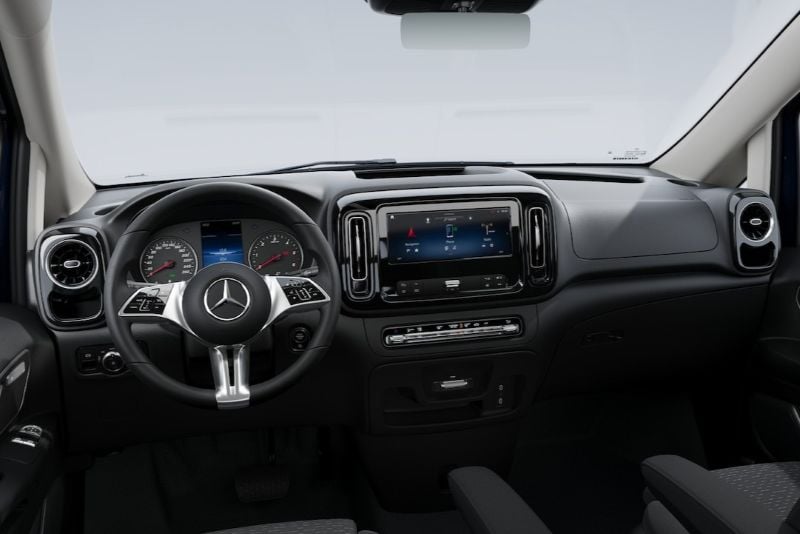
Indeed, while it’s easy to tell which is the older model of the two when stepping from one van to the other, the Vito’s dashboard is logically laid out, while the introduction of materials and switchgear borrowed from Mercedes’ more premium parts bins feels pleasantly in-keeping with the brand.
Moreover, while some will bemoan a comparatively small 10.25-inch central screen, it does get direct smartphone mirroring, not to mention the high-end MBUX (Mercedes-Benz User Experience) operating system found in many of the marque’s luxury vehicles.
Versus the Vito, the Transporter interior feels the more contemporary, largely thanks to the 13-inch touchscreen that dominates the interior.
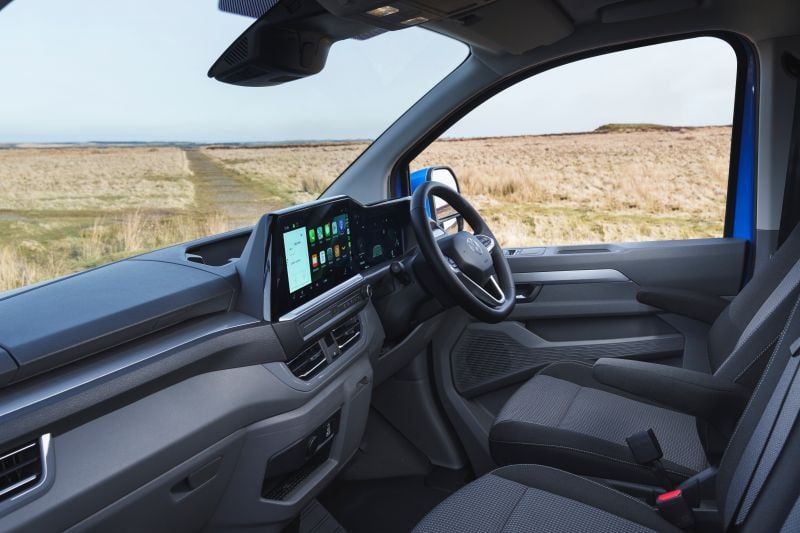
Perched atop the dashboard and angled towards the drivers, it’s definitely one of the more ergonomic touchscreens around and helps limit those frustrating moments when you’re tapping blindly while keeping your attention on the road.
That said, moving the heating controls to the touchscreen seems a false economy since it takes longer and risks more inaccurate inputs than if Volkswagen had retained physical dials.
Even so, the touchscreen is symptomatic of an interior that has put connectivity and convenience at its forefront. As such, you’ll be spoiled for choice when it comes to charging items – both mobile phones and even tools.
Build quality on both models is very good – in fact, they arguably rank joint-first across the entire medium van class.
They’re also comfortable, the seats offer lots of adjustment and visibility is excellent, making either van a pleasant space to pound the miles.
Vito vs Transporter: Standard Equipment & Features
While we are highlighting the Volkswagen Transporter in entry-level Commerce trim here, it represents the starting point for one of the more diverse medium van ranges in the class.
Taking inspiration from its Ford Transit Custom sibling, the Transporter is available in myriad body styles – SWB, LWB, Kombi and Multivan – with three engine choices split across now five trim levels.
Originally comprising Commerce, Commerce Plus and Commerce Pro, the Transporter can also be had now in Commerce Pro S and Sportline following a recent update of the range.
The Mercedes-Benz Vito, meanwhile, gets just two trim options: PRO and SELECT.
The base Vito PRO, much like the Transporter Commerce, keeps standard equipment levels to a modest standard with steel wheels, conventional air-conditioning and manually adjustable features all-round, though the Vito does make many of its more premium items available as options.
X – Standard
O – Optional
- N/A
Vito vs Transporter: Reliability
Durability counts for a lot when it comes to large van drivers with niggling issues and gremlins being the scourge of costly downtime.
In this instance, both Mercedes and Volkswagen enjoy a good reputation for reliability.
In fact, both manufacturers have been singled out for their success in the FN50 reliability survey conducted by Fleet News.
In recent years Volkswagen has not only ruled the roost, but it is the Transporter that has been identified as the most reliable van on the market.
It is worth noting here that this is largely in reference to the previous generation T6 and T6.1 model, with the current T7 being too new to have an input in the results of the most recent survey.
Counting in its favour, however, is it is based on the Transit Custom, which has performed strongly in recent years, suggesting the Transporter is well placed to continue its positive results.
Sitting right behind Volkswagen as the second most reliable van brand is Mercedes-Benz, the German firm having held the top spot for many years until recently.
This will come as little surprise to anyone who has owned a Mercedes-Benz Sprinter over the years, the three-pointed star’s flagship having developed a global reputation for racking up hundreds of thousands of miles without skipping a beat.
Point is, it bodes well for anyone looking to put plenty of miles on their Vito that it will keeping going long before other vans have wilted.
Vito vs Transporter: Safety & Security
Both the Mercedes-Benz Vito and Volkswagen Transporter have been awarded the maximum five-stars by EuroNCAP based on the strengths of their safety features and effectiveness in simulated tests, such as crash avoidance.
Vito vs Transporter: THE DIRECT VERDICT
It’s perhaps something of an oxymoron to compare two vans from perceived ‘premium’ brands in their most basic trim, but both the Mercedes-Benz Vito and Volkswagen Transporter get the fundamentals right while retain their kudos, even at the entry-point.
Of the two, the latest generation Transporter emerges as the more complete commercial vehicle for its purpose.
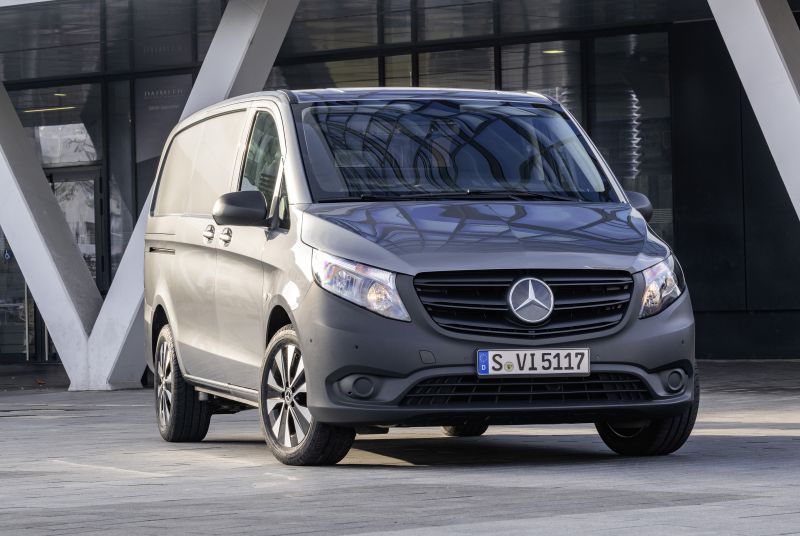
It is more spacious (in LWB guise at least) and comfortably trumps the Vito for hauling payload. It’s also good to drive, refined on the move and – if the last generation is anything to go by – should be super reliable.
That’s not to dismiss the Vito, however. It offers greater performance and cheaper running costs, while it is the more spacious van in L2 trim when compared with the SWB Transporter.
Many will also prefer its more functional interior design versus the Transporter’s more contemporary affair.
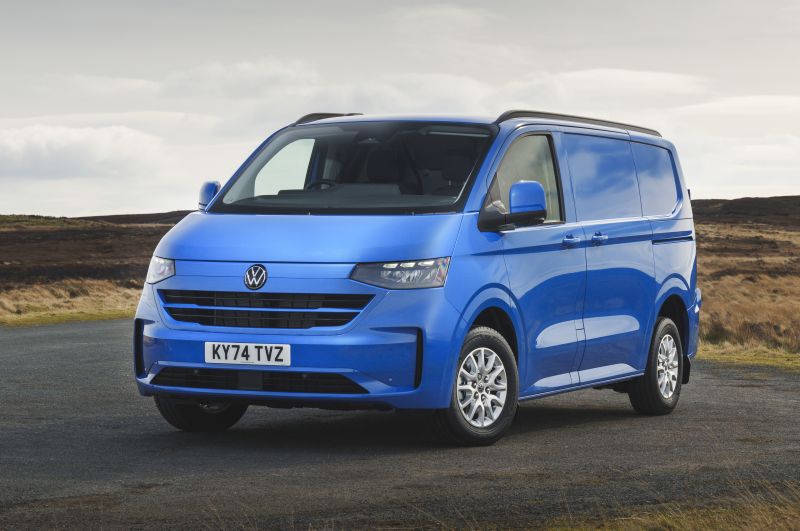
Here the Transporter gets the edge on the back of its superior payload capacity – it’s a van that performs best at being a van – but the Vito isn’t a distant second place.
And anyway, these are positions that could very easily be reversed in a few months’ time when the eagerly anticipated next generation Mercedes-Benz Vito finally arrives...