


Ford Transit vs Maxus Deliver 9: Which is the Best Large Van?
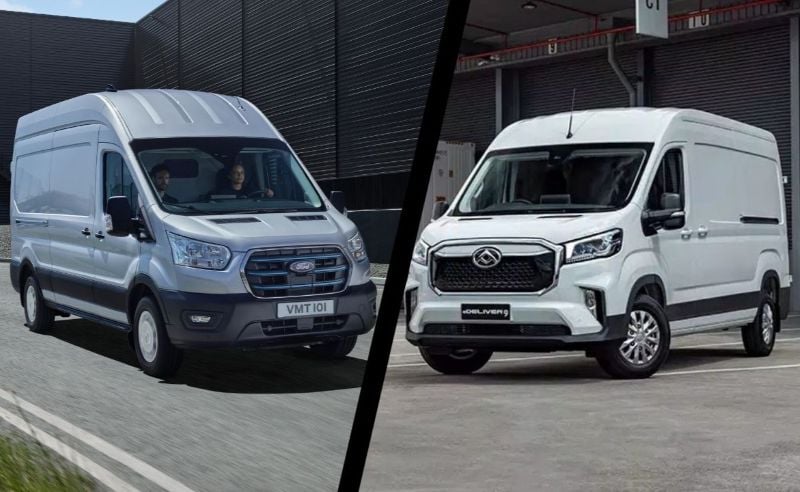
Ask any tradesperson what they need from their large van and there is a strong chance the response will simply be that it needs to ‘get the job done’... so should you rely on the Ford Transit or the Maxus Deliver 9 to do just that?
Vans Being Compared
- Ford Transit 2.0 EcoBlue 130PS Trend – Panel Van, L3/H2 – 3500GVW - FWD
- Maxus Deliver 9 2.0 D20 LUX – Panel Van, L3/H2 – 3500GVW - FWD
Big, practical, flexible, durable and hard-wearing, large vans are the toughened workforce of Britain’s roads with hundreds of thousands pounding the streets of the UK delivering, transporting and supplying every single day.
As such, reputation gets you a long way in this segment and when it comes to reputation, no van comes more revered than the Ford Transit.
A nameplate celebrating its 60th birthday in 2025, the Ford Transit has held status as Britain’s favourite large van for decades now.
Without a doubt, every sale of today’s Ford Transit has been earned through decades of faithful service being the ‘Backbone of Britain’, as its advertising slogans once boasted. In fact, ‘Job Done’ was another one of those slogans.
But while it is a stretch to think that tens of thousands of annual sales could be wrong, is there something to be said for considering an alternative developed through fresh eyes and a different concept of what a large van should offer?
Take the Maxus Deliver 9, for example, a large van that can count its age on just one hand – five years to be exact – but one that has been steadily gaining popularity in the UK on the back of a value-orientated ticket.
The Transit and the Deliver 9 might be at opposing ends of historical significance, but today they share a lot in common. In fact, squint at the Deliver 9 and you might even mistake it for the Transit.
So, when it comes to large vans, is there no substitute for experience, or is it high time to try something new?
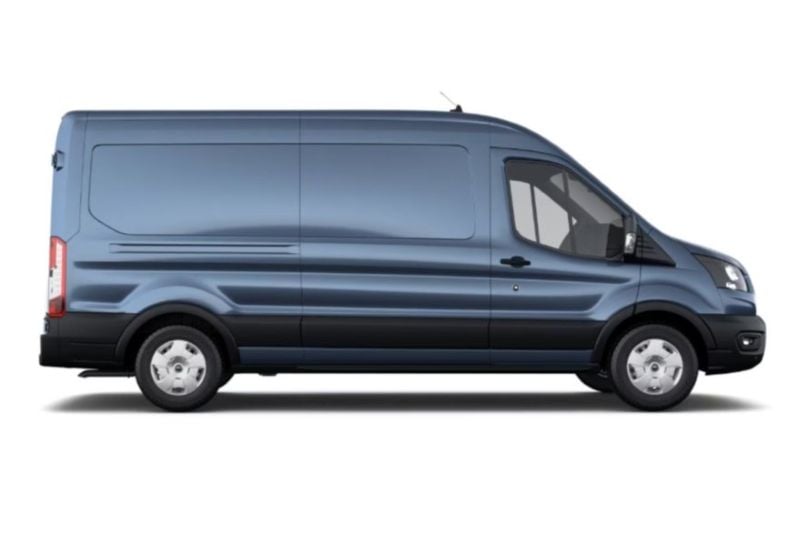
Lease the Ford Transit if...
- You need outright payload capacity
- You enjoy a dash of vigour when driving a van
- You’d benefit from Ford’s extensive dealer and service network
- You’re taking advantage of a huge breadth of body styles
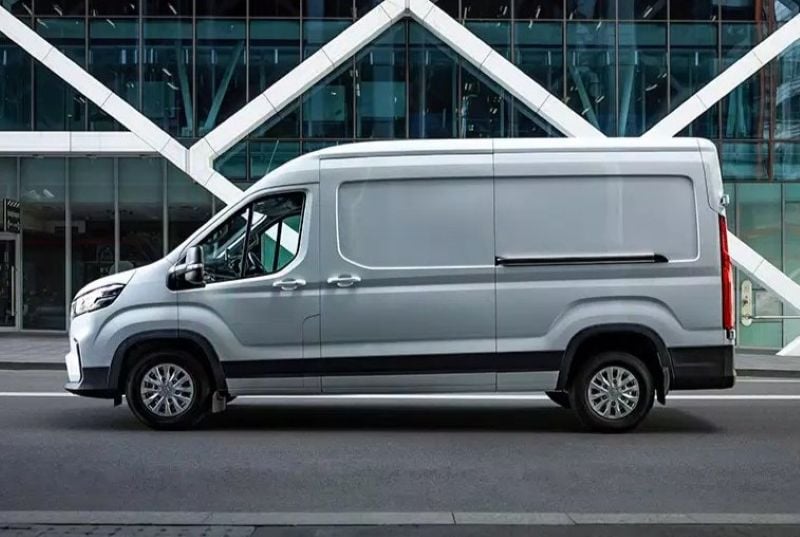
Lease the Maxus Deliver 9 if...
- You’re in the market for a great value large electric van
- You want superior specification levels
- Modest dimensions are easier to navigate in urban environments
- You spend a lot of time behind the wheel
Lease Ford and Maxus Vans with Vansdirect
Leasing a new Large Van with Vansdirect has never been easier or better value.
Get the right van at the right deal, fast and hassle-free with the best large van leasing deals available across a wide array of models, including the Ford Transit and Maxus Deliver 9.
Speak to our expert team today and you could be driving a new van for less than you expect.
Transit vs Deliver 9: Cargo Load, Dimensions & Practicality
When it comes to body style, the Ford Transit and Maxus Deliver 9 strike for similar playing fields in a manner that makes you think the latter is taking direct inspiration from the class standard.
Indeed, the Transit has been around such a long time, it has taken on a bewildering array of forms, from basic panel van to minibus to flatbed to high-performance one-off racer.
Many of these forms remain today and means you can have your Transit as a panel van, a crew van, a chassis cab, a Luton Box, a fridge van, a dropside, a tipper and a minibus. And if that wasn’t enough, Ford works with numerous conversion experts if you need something particularly special.
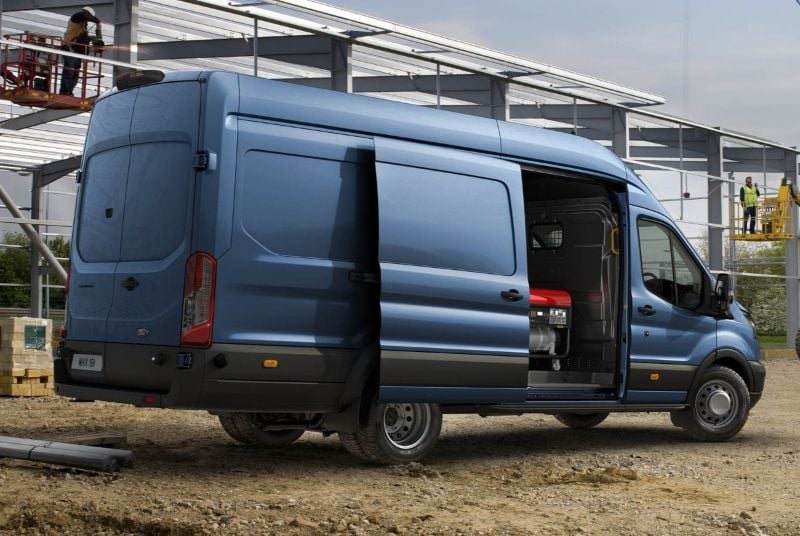
We’ll stick with the panel van for this head-to-head, where the Transit is offered in five body sizes - L2/H2, L2/H3, L3/H2, L3/H3 and L4/H3.
The Deliver 9, meanwhile, makes do with L2/H2, L3/H2 and L3/H3 in panel van shape, but there are chassis cab, Luton Box and minibus options too.
For the purpose of this match up, we’re pitching the mid-range L3/H2 body size to ensure a direct comparison between the two models.
In L3/H2 guise, the Transit is slightly bigger than the Deliver 9 in terms of dimensions, which translates to being slightly bigger in terms of load space too.
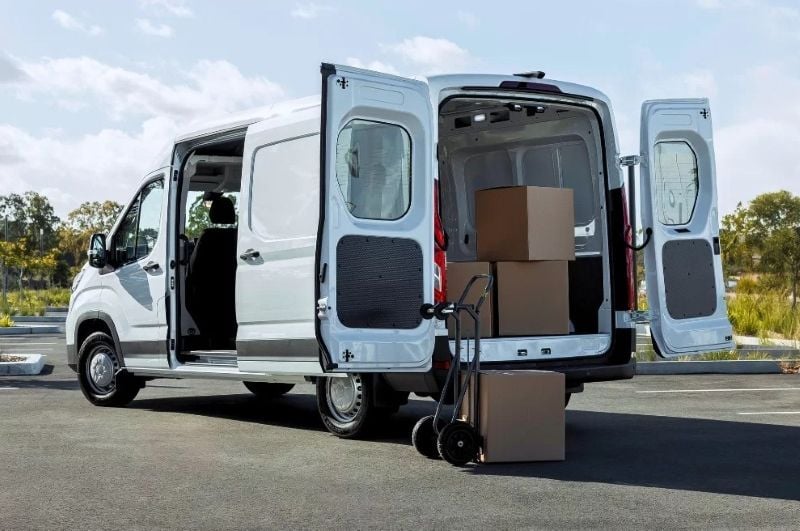
The Transit measures in at just under six metres (5981mm), compared with the Deliver 9 at (5940mm), though the Maxus is taller at 2515mm versus the Transit’s 2411mm.
That give and take should set the two models up to be all-but-identical inside, but the Transit has the better packaging with a superior load length of 3533mm, whereas the Deliver 9 stops shorter at 3413mm.
It adds up to the Transit L3/H2 having a total cargo hold of 11.5 cubic metres, which betters the Deliver 9’s 11 cubic metres.
It’s worth noting, however, that each Stellantis large van (Citroen/FIAT/Peugeot/Toyota/Vauxhall), the Mercedes-Benz Sprinter, Renault Master/Nissan Interstar and Volkswagen Crafter/MAN TGE offer comfortably more load space in L3/H2 guise.
|
|
Maxus Deliver 9 L3 H2 |
Ford Transit L3 H2 |
|
Exterior Length (mm) |
5940 |
5981 |
|
Exterior Height (mm) |
2515 |
2411 |
|
Wheelbase (mm) |
3760 |
3750 |
|
Maximum Width of Side Sliding Door (mm) |
1269 |
1300 |
|
Maximum Load Length at Floor (mm) |
3413 |
3533 |
|
Maximum Load Height (mm) |
1802 |
1886 |
|
Maximum Load Width (mm) |
1800 |
1784 |
|
Width Between Wheelarches (mm) |
1366 |
1392 |
|
Maximum Load Volume (cu m) |
11.0 |
11.5 |
Transit vs Deliver 9: Weights, Loads & Towing
If the Ford Transit L3/H2 and Maxus Deliver 9 L3/H2 are closely matched in terms of dimensions and load space, the same can be said for payload and towing.
We’ve whittled the vast number of engine, trim and size available with the Transit to pick the 2.0 EcoBlue 130PS Trend (350, FWD), which is quoted with a 1310kg payload capacity.
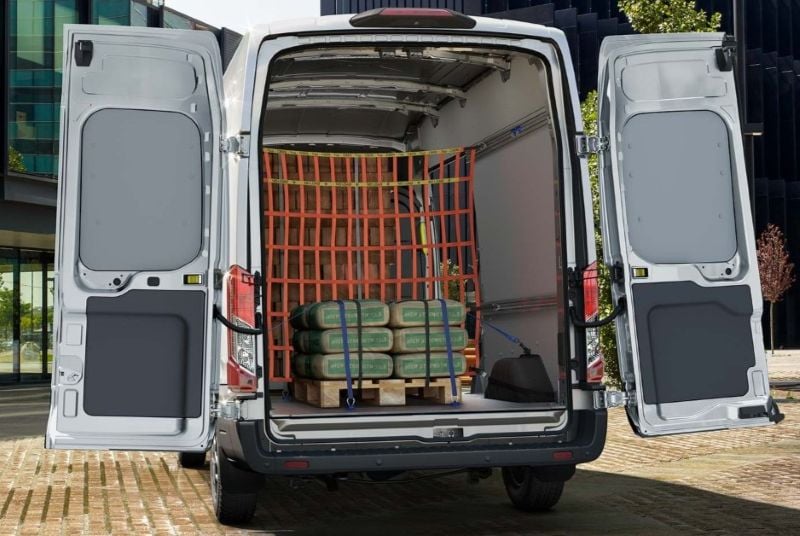
Competitive for the large van class, it is however possible to get a more generous payload all the way up to 2357kg by opting for a higher GVW (up to 5000kg) and specifying it with rear-wheel drive.
By contrast, the Deliver 9 in 2.0 D20 LUX (350, FWD) trim comes in a little less than the Transit at 1215kg. Notably, however, the best payloads available with the Maxus package (1490kg) can be found with the largest electric powertrain (100kWh) in rear-wheel drive trim.
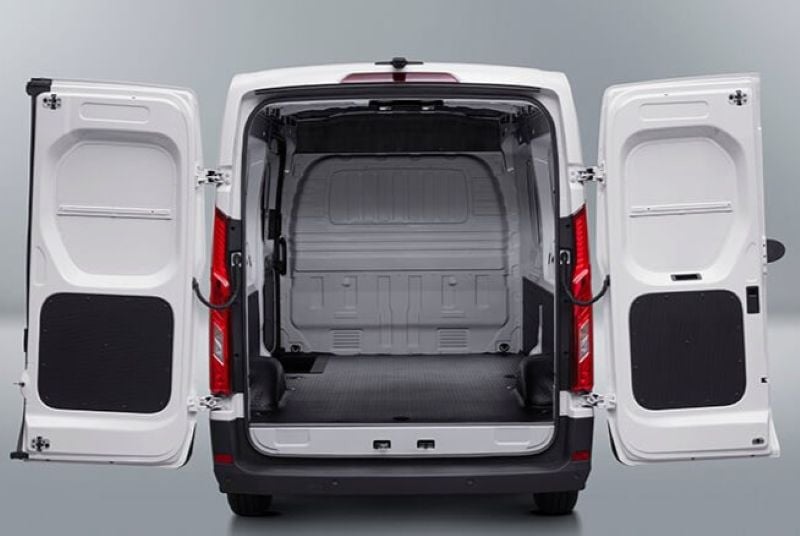
The Deliver 9 does have more pulling power though, rising to 2800kg, though the Transit will handle a negligible amount less at 2750kg.
Transit vs Deliver 9: Engine, Performance & Running Costs
Both the Ford Transit and Maxus Deliver 9 split its engine choices across 2.0-litre turbodiesel and electric options (see below), though the former has three power options of 105PS, 130PS or 165PS.
Here we’re comparing the 130PS (128bhp) 2.0-litre EcoBlue engine as found in the Transit with the Deliver 9 2.0-litre D20, which generates 147bhp.
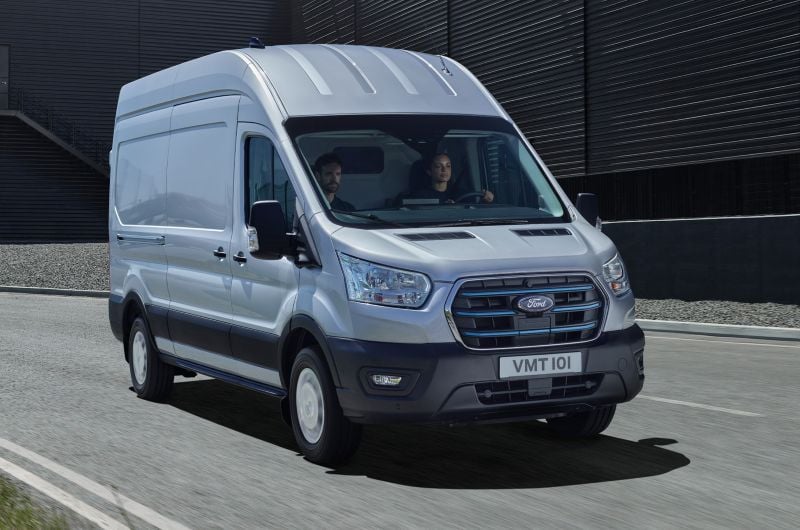
Though less powerful than the Deliver 9, the 130PS 2.0-litre EcoBlue is still brisk with its superior 385Nm of torque, which is sufficient to haul maximum payloads.
The Transit is marginally more economical than the Maxus too, achieving 33mpg and 226g/km of CO2. However, there isn’t much in it between the two with the Deliver 9 managing 32mpg and emitting 231g/km of CO2.
Unlike the Transit, which is available with the choice of manual or an automatic gearbox, the Deliver 9 makes do with a manual transmission.
This potentially limits the Deliver 9’s appeal among those who are likely to spend their commute crawling in stop-start traffic, but those who conduct motorway miles will appreciate the more urgent responsiveness for overtaking.
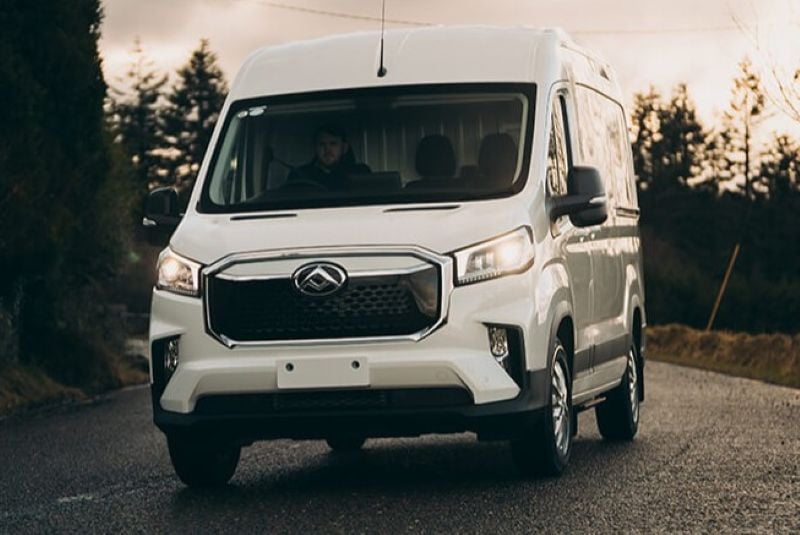
Ford has an esteemed reputation for tuning its vans for almost physics-defying driving enjoyment and the Transit is no exception.
Despite its heft, the Transit is responsive and well-balanced, with the steering proving sufficiently light to use in tighter spots before firming up to inspire confidence as you increase speed.
Unladen can result some body flex and an active ride, but with some weight in the back the Transit hustles along roads with more vigour than you’d expect for something so large and heavy.
Compared to the Transit, the Deliver 9 offers a surprisingly plush ride, especially once it settles with payload in the back. Better yet, the feathery steering set-up makes it a doddle to drive and park in low-speed environments.
It ensures the Deliver 9 feels more manageable to drive in urban environments, unlike more unwieldy models in the large van class.
E-Transit vs eDeliver 9: Electric, Range and Recharging
The shift to electric power hasn’t escaped the large van class with both the Ford E-Transit and Maxus eDeliver 9 – as they are known – being no exception.
In Maxus’ case, the Chinese firm has been one of the more proactive marques when it comes to electric and commercial vehicles. In fact, more models in its range are powered by electric than a conventional ICE.

In the case of Maxus, the eDeliver 9 gets a more comprehensive line-up of power options than it does in diesel guise.
Three battery sizes are offered – 77kWh, 88kWh and the recently-added 100kWh.
The 77kWh and 88kWh batteries are evenly matched with 202bhp on tap and 330Nm of torque with the differentiation in their size to be found in their range capacity. In entry-level guise, the eDeliver 9 with a 77kWh battery has a combined WLTP range of 189 miles, while the 88kWh goes all the way to 214-miles.
Opt for the largest 100kWh battery and you’ll get 224-miles out of it, while power increases to 228bhp too.
While the 77kWh is only offered in front-wheel drive, the 88kWh can be specified as front-wheel drive or rear-wheel drive. The 100kWh battery is only available in rear-wheel drive and is capable of a generous 1490kg of payload.
As for the E-Transit, Ford offers two battery options – 68 and 89kWh – but each are offered in a Standard Range or Extended Range form. Go for Standard Range and the E-Transit can go between 161 and 193-miles depending on which trim you select, while Extended Range is anywhere between 212 and 249-miles.
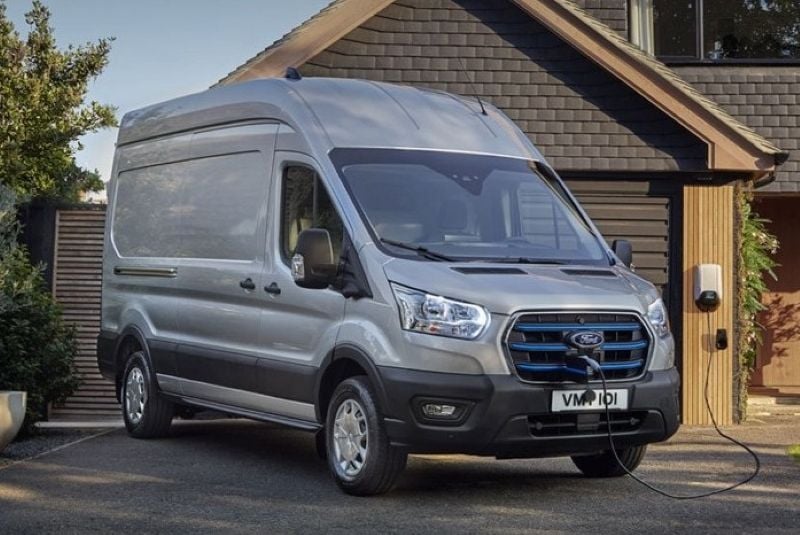
The E-Transit is the superior van for limiting downtime though with the capability to run up to 180kW on a fast charge for a rapid 28-37mins of recharge. By contrast, the eDeliver 9 will take around 50mins to recharge from 10-80%.
Transit vs Deliver 9: Cab & Interior
Compared to some of the more utilitarian treatments afford to some of the older large vans, both the Ford Transit and Maxus Deliver 9's interiors are a pleasant place to spend time.
Ford has spent decades honing the Transit’s cab to meet the needs of its drivers, which is why you’ll find a plethora of cubby holes, storage space and cup holders to keep knick-knacks safely and securely stowed away.
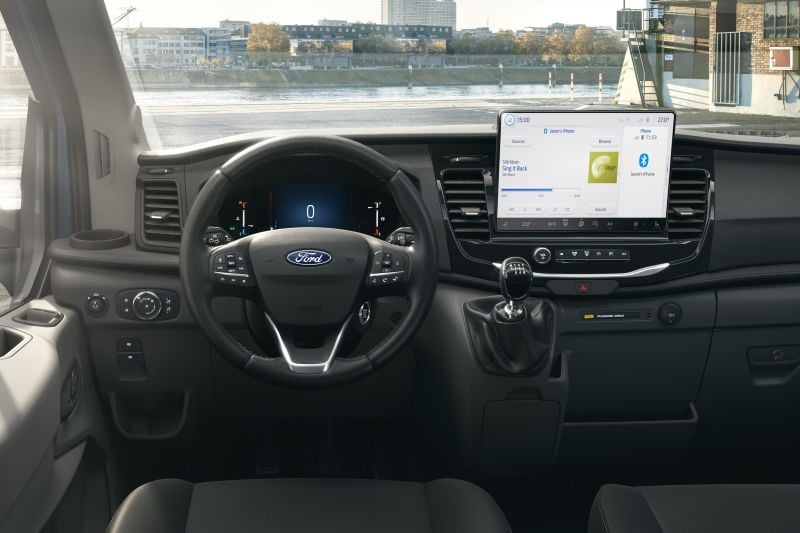
It feels big and comfortable too, while the build quality – which is hard-wearing – has a plushness to it in the soft-touch controls and materials.
Better yet, the Transit has had a modern makeover in recent years to integrate more smart-connected technology, as evidenced by the vast 12-inch infotainment touchscreen display, which dominates the dashboard. Not only that, there is an 8-inch digital display behind the steering wheel.
While fiddly to use on the move – as most touchscreens are – it is well-laid out and provides a decent hub for much of the Ford Pro eco-system that helps you stay on top of potential issues and organising repairs to minimise downtime.
We’re also rather taken with the nifty Delivery Assist system, which when engaged activates the hazard lights, alarms, closes windows and locks the doors as soon as you step out before reverting them back to their original state the moment you get in and press the brake pedal. The system is designed for delivery drivers making quick stops to save precious time on their rounds.
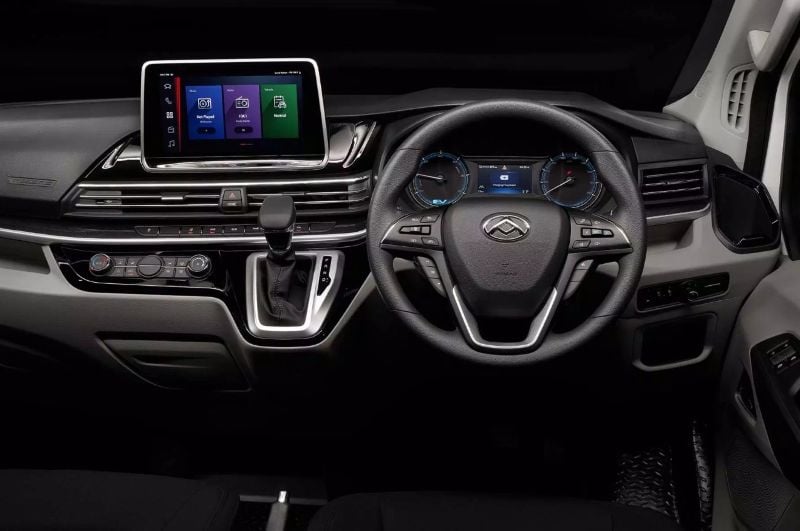
Step into the Deliver 9 and there is something quite refreshing about its more conventional approach to its interior.
Firstly, the dashboard design is flatter and more aesthetically pleasing with flourishes of piano-black trim and a multi-tonal palette, as though it was derived from a car. It’s also well laid-out, with several physical buttons being shifted away from the fiddly touchscreen and onto the fascia.
It’s easy to get comfortable in the Deliver 9 too, while the 12.3-inch infotainment touchscreen has improved significantly with each update.
There are only two cupholders though, so one of the three passengers will have to settle for holding onto their brew when the cab is full.
Transit vs Deliver 9: Standard Equipment & Features
The Ford Transit and Maxus Deliver 9 are evenly matched in terms of specification and features in their respective Trend and LUX trims.
Both trims are a step up from the base model for each van, which limit some of the creature comforts to keep costs down.
There is a particular emphasis on safety for both models with an array of electronic devices designed to keep drivers alert, prevent them from straying out of their lane and avoiding those pesky blind spots.
Moreover, the interiors are brimming with handy technology, from Bluetooth to DAB radios to Apple CarPlay/Android Auto connectivity, plus air-conditioning and multi-adjustable seating.
With little to split the pair on specification, the Deliver 9 arguably presents a tempting proposition with its typically competitive pricing versus the Transit.
It is this area where Maxus have really found its niche, using the Transit as a reference point in many areas while keeping costs comfortably below its muse.
|
|
Maxus Deliver 9 2.0 D20 LUX |
Ford Transit 2.0 EcoBlue Trend |
|
Adjustable Driver's Seat |
X |
X |
|
Electric Windows |
X |
X |
|
Automatic Windscreen Wipers |
X |
X |
|
Air-Conditioning |
X |
X |
|
DAB Digital Radio |
X |
X |
|
Bluetooth |
X |
X |
|
Apple CarPlay & Android Auto |
X |
X |
|
LED Headlights |
X |
X |
|
Fog Lights |
X |
X |
|
Alloy Wheels |
X |
O |
|
Electric Mirrors |
X |
X |
|
Tyre Pressure Monitor |
X |
X |
|
Drivers Airbag |
X |
X |
|
Passenger Airbag |
X |
X |
|
Side Airbags |
X |
X |
|
Front & Rear Parking Sensors |
X |
X |
|
Electronic Stability Control |
X |
- |
|
Cruise Control |
X |
X |
|
Emergency Braking System |
X |
X |
|
Lane Departure Warning System |
X |
X |
|
Blind Spot Detection |
X |
X |
|
Lane Change Assist |
X |
X |
|
Driver Monitoring System |
X |
- |
|
Pre-Collision Assist |
- |
X |
|
Reverse Brake Assist |
- |
X |
|
360-Degree Camera |
- |
X |
Transit vs Deliver 9: Reliability
Durability counts for a lot when it comes to large van drivers with niggling issues and gremlins being the scourge of costly downtime.
In this instance, the Ford Transit enjoys a good reputation for reliability, particularly after a sweeping update on the engine front introduced the proven 2.0-litre EcoBlue diesel to the line-up.
The move has helped the Transit soar in reliability surveys in recent years, despite such ubiquitousness often proving a deterrent to such a good result. Indeed, despite its high sales, the Transit ranked a strong sixth overall out of all commercial vehicles in the FN50 reliability survey conducted by Fleet News.
Moreover, Ford performs well as a whole range, the brand ending up second behind only Volkswagen in the most recent assessment.
Maxus, meanwhile, is creeping up the charts and has successfully cracked the top ten in that same survey as a brand in recent years.
Unlike its rival manufacturers, Maxus is broadly a dedicated commercial vehicle brand and has been diligently developing a dedicated network around the UK to better support owners.
However, it can’t match Ford for its sheer breadth across the UK with a mammoth dealer network covering its passenger and commercial vehicles totalling 230 sites in this country alone. Moreover, it has also developed a network of dedicated Ford Van Centres to specifically cater to the commercial community.
Transit vs Deliver 9: Safety & Security
Both the Ford Transit and Maxus Deliver 9 have been awarded the maximum five-stars by EuroNCAP based on the strengths of their safety features and effectiveness in simulated tests, such as crash avoidance.
Ford Transit vs Maxus Deliver 9: THE DIRECT VERDICT
Spend time with the Maxus Deliver 9 and there is a clear impression that it has used the Ford Transit as its primary reference point.
That’s not to say the Chinese model is a direct copy of the Transit, but there is some evident inspiration in the exterior design, the interior, the range line-up and the engine options.
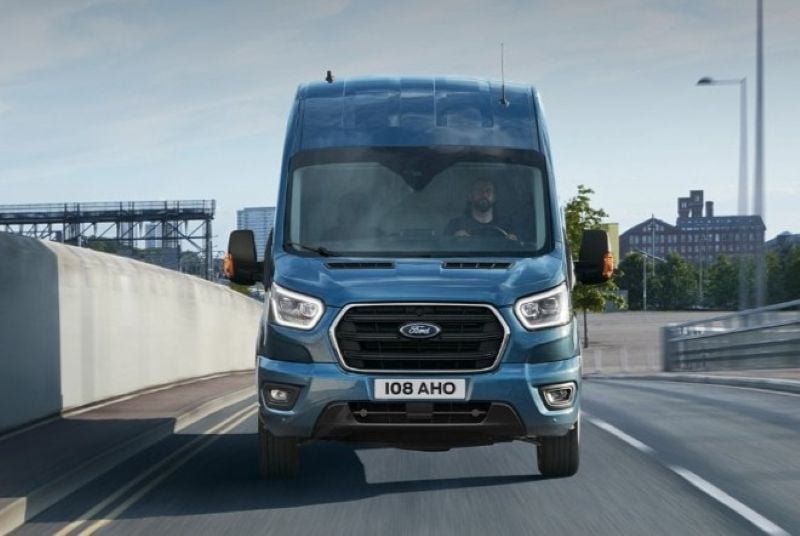
That said, it is little wonder the Transit has been utilised in this way. In many ways, it is the standard of the large van class, even after all these years.
It feels well put together, particularly the sturdy yet premium interior, it offers a surprisingly refined driving experience, and it’s supported by a vast aftersales network.
Indeed, today’s Transit feels every inch a van finessed by decades of irreplaceable experience in this sector.
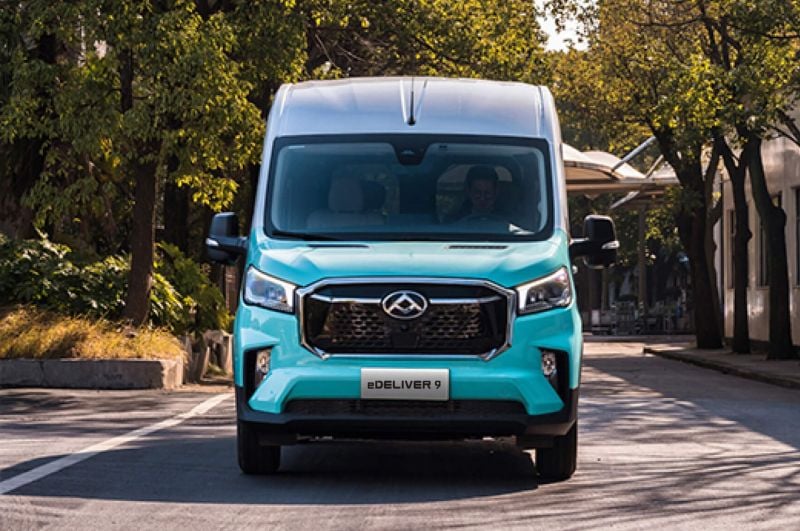
The Deliver 9 doesn’t have such a legacy going for it, but it’s matches the Transit in many areas, including practicality, load space, efficiency and specification.
More importantly, it does so in a great value package that makes it look like a very tempting proposition, especially in eDeliver 9 electric trim, which mates its cost-efficient outlay with penny-pinching running costs.
And yet, while imitation is the sincerest form of flattery, for many it’s enough that the Ford Transit remains the ultimate OG.