



2025 Maxus Deliver 7: Everything You Need To Know
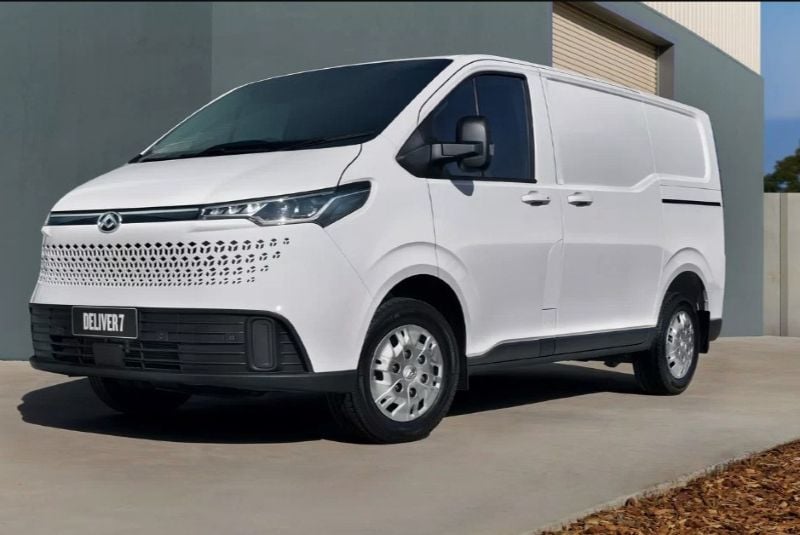
In a UK commercial market forged on the strength of its heritage marques and fierce brand loyalty, it’s a daunting task for any incoming manufacturer to make a dent on the established order.
And yet, slowly but surely, Chinese manufacturer Maxus has been steadily consuming a greater slice of UK LCV market share pie with every passing year.
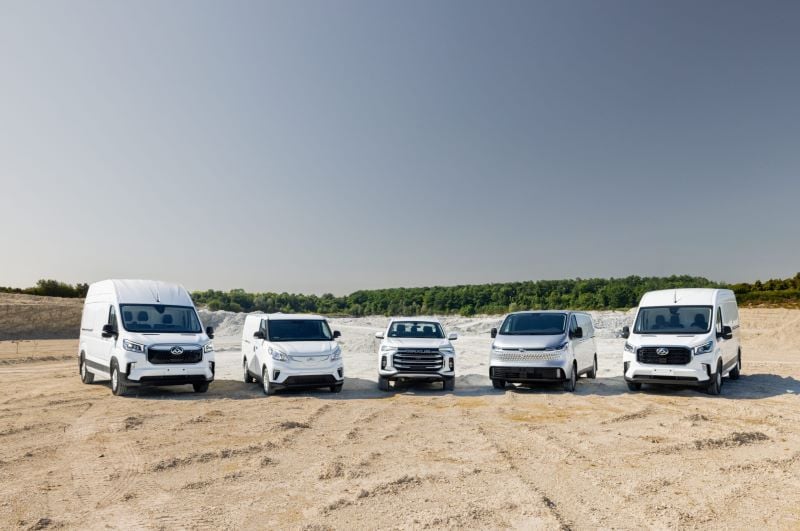
Underpinned by the success of its largest offering, the Maxus Deliver 9, the company is now expanding its range to ensure the brand is represented in all commercial vehicle markets, including the small van class – with the Maxus eDeliver 3 – and the pick-up truck segment, where it has two offerings, the diesel Maxus T60 MAX and electric Maxus eTerron 9.
However, it is in the medium van class where Maxus is now hoping to make an impression against big-selling alternatives like the Ford Transit Custom and the Vauxhall Vivaro.
Its entry is the Maxus Deliver 7, available with both diesel and electric powertrains – but is it the van to maintain Maxus’ momentum on these shores?
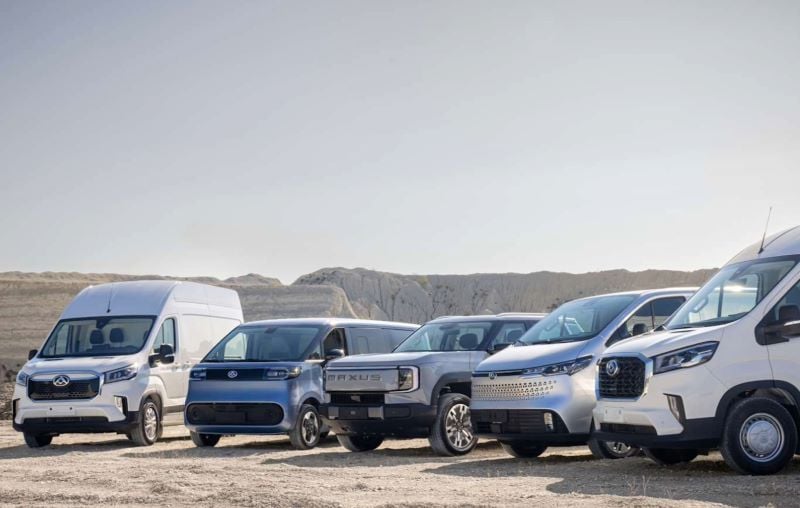
How New is Maxus?
Maxus may count itself as one of an increasing number of Chinese founded automotive brands arriving on these shores, but the name itself actually has a very British origin.
In fact, ‘Maxus’ was a moniker used by now defunct British commercial vehicle company LDV back in 2004.
Back then, the LDV Maxus, as it was known, represented the former British Leyland-owned marque’s newest entry into the medium and large van classes. However, the firm’s collapse in 2008 paved the way for SAIC (Shanghai Automotive Industry Corporation) to acquire LDV’s intellectual property, including naming rights.
As a result, SAIC adopted ‘Maxus’ as a brand name in its own right and relaunched the company in 2011 with a global footprint that have seen its models gain a strong presence in China, South America and Russia especially.
Moreover, LDV hasn’t disappeared entirely either. In fact, the brand is still going strong in Australia, where it sells vans, pick-up trucks and even an SUV.
2025 Maxus Deliver 7: Dimensions, Loads & Body Styles
|
Maxus Deliver 7 Dimensions |
L1/H1 |
L2/H1 |
L2/H2 |
|
Exterior Length (mm) |
5079 |
5372 |
5372 |
|
Exterior Height (mm) |
1990 |
1999 |
2420 |
|
Exterior Width w/o. Door Mirros (mm) |
2030 |
2030 |
2030 |
|
Wheelbase (mm) |
3000 |
3357 |
3357 |
|
Max Width of Side Sliding Door (mm) |
990 |
990 |
990 |
|
Max Load Length at Floor (mm) |
2547 |
2913 |
2913 |
|
Max Load Height (mm) |
1328 |
1428 |
1793 |
|
Max Load Width (mm) |
1800 |
1800 |
1800 |
|
Width Between Wheelarches (mm) |
1390 |
1390 |
1390 |
|
Max Load Volume (cu m) |
5.9 |
7.2 |
9.2 |
Maxus Deliver 7 Payload Capacity:
L1/H1 Electric – 1125-1200kg
L2/H1 Electric – 1055-1135kg
L2/H2 Electric – 1025kg
L2/H1 Diesel – 1220kg
L2/H2 Diesel – 1220kg
The Maxus Deliver 7 and Maxus eDeliver 7 are available with the choice of a single body style – panel van – with three variations on body sizes - L1/H1, L2/H1 and L2/H2.
Nestled in the medium van class, the Deliver 7 is therefore a rival to the Ford Transit Custom, Vauxhall Vivaro and Renault Trafic.
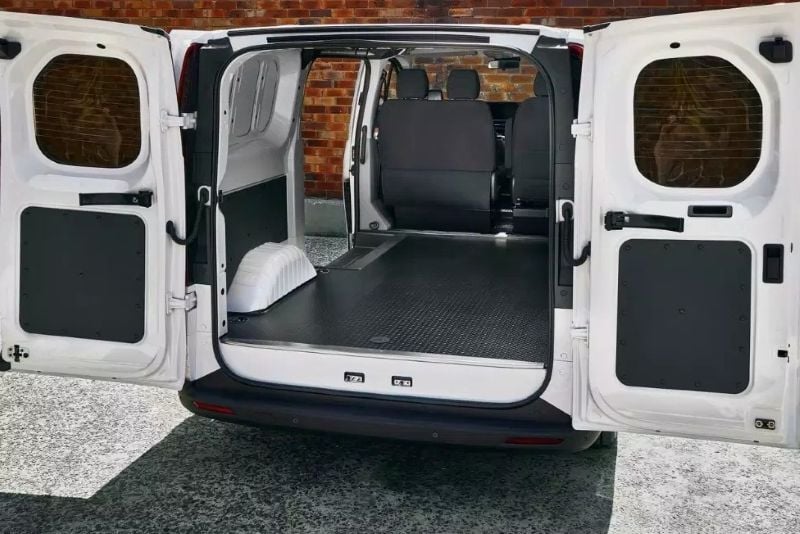
With its particularly short front overhang allowing for greater space in the cargo area, the load bay proves one of the largest in its class with even the base L1/H1 offering upwards of 5.9 cubic metres.
Better yet, the extended L2 size opens up to a full 7.2 cubic metres, which exceeds the capacity of the L2 versions for the Transit Custom (6.5cu m) and the Vauxhall Vivaro (6.1cu m).
Notably, the Deliver 7 is one of only a handful of medium vans on the market offered in a taller H2 specification.
While the higher dimensions preclude it from being able to fit beneath barriers in most multi-storey car parks, it does allow for a sizeable increase in cargo space, rising to a cavernous 9.2 cubic metres. This puts it in league with the larger Maxus Deliver 9 in terms of load space.
In addition, the Deliver 7 comes with the full array of lashing points, rubber lining to the floor and cargo bay lighting, plus wide sliding side doors that open up 990mm of access space.
Importantly, all versions of the Deliver 7 – including the electric versions – exceed one-tonne in terms of payload.
In fact, the payload difference between diesel and electric is fairly negligible with the former offering up to 1220kg, while the latter ranges between 1025 and 1200kg depending on which body size is chosen.
This is an important point since the margin in payload capacity between diesel and heavier electric vans in the medium van sector can really vary, but with the Maxus it doesn’t have the same disparity.
As such, in electric eDeliver 7 trim, the payload capacity is very competitive versus other EV rivals, like the Ford E-Transit Custom and Citroen e-Dispatch, albeit less so as a diesel.
2025 Maxus Deliver 7: Engine, Performance & Powertrains
|
|
2.0TDI |
77kWh Electric |
88kWh Electric |
|
Powertrain |
Diesel |
Electric |
Electric |
|
Engine Capacity |
1996cc |
- |
- |
|
Battery Capacity |
- |
77kWh |
88kWh |
|
Transmission |
Manual |
Automatic |
Automatic |
|
Max Power |
148bhp |
201bhp |
201bhp |
|
Max Torque |
375Nm |
330Nm |
330Nm |
|
Fuel Economy [WLTP] |
34mpg |
- |
- |
|
CO2 [WLTP] |
211g/km |
0g/km |
0g/km |
|
Fuel Tank |
80 litres |
- |
- |
|
Range [WLTP] |
- |
198 miles |
230 miles |
|
Recharge (90kW/20-80%) |
- |
43mins |
43mins |
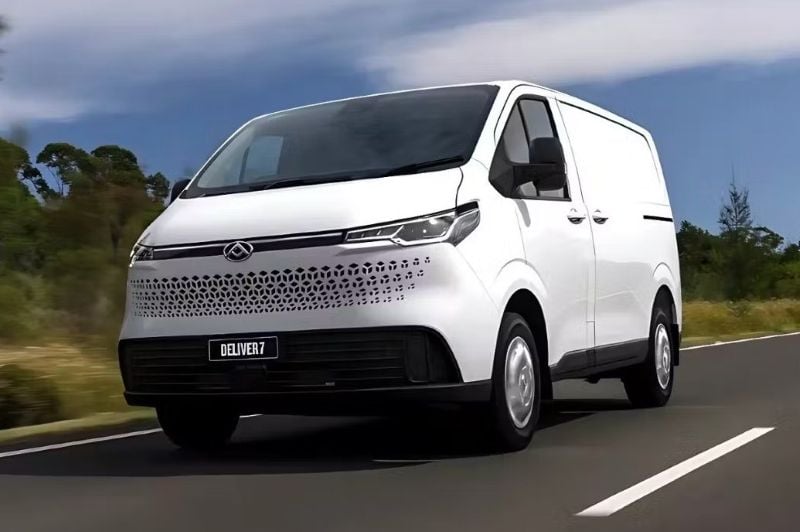
The Maxus Deliver 7 and Maxus eDeliver 7 is offered with three powertrain options – one conventionally-fuelled, the other two electric.
In diesel guise, the Deliver 7 comes with a 2.0-litre turbodiesel engine generating 148bhp, which is in line with other models in the medium van class, and ensures strong pulling power with 375Nm of torque.
The more cost-effective solution, however, is the electric Maxus eDeliver 7 which is available with either 77kWh or 88kWh batteries.
Maxus has been one of the more pro-active commercial vehicle manufacturers when it comes to electric power with EV vehicles. In fact, only the Deliver 7 and Deliver 9 come with the option of diesel power, whereas the smaller eDeliver 3 and eDeliver 5, plus the eTerron 9 pick-up truck, are electric only.
Deciding which power option is best for you with the Deliver 7 will come down to what you use your van mostly for.
For those who drive long mileage stints or take heavy payloads and need the pulling power that comes with a torquey ICE, the diesel engine is the preferred choice.
However, if your mileage is relatively modest, you spend much of your time driving in urban environments and you have easy access to recharging facilities, the eDeliver 7 makes financial sense.
Both battery options deliver the same power and torque – 201bhp and 330Nm – with the difference coming from the amount of range each can achieve.
The 77kWh version is aimed at last-mile delivery services with its 198 miles of range, while the larger 88kWh battery can go for 230 miles, which matches the range quoted for the Citroen e-Dispatch and Ford E-Transit Custom.
2025 Maxus Deliver 7: Specification, Features & Safety
|
Maxus Deliver 7 |
L1/H1 |
L2/H1 |
L2/H2 |
|
2.0TDI |
|
X |
X |
|
77kWh Electric |
X |
X |
|
|
88kWh Electric |
X |
X |
X |
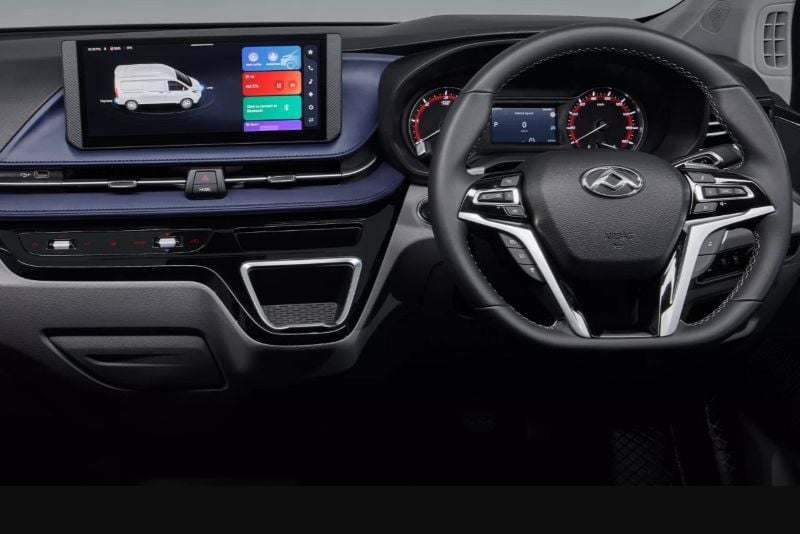
The Maxus Deliver 7 gets a modern-looking interior that has been designed for ergonomic comfort with its well-placed controls and attractive swooping layout.
Just the one trim level is offered across the range, though there are variations on which engine or powertrain can be mated to a particular body style.
Standard equipment on the Maxus Deliver 7, includes:
- Air-conditioning
- One touch start
- Heated steering wheel
- Automatic wipers
- Electric windows
- Automatic LED headlights
- Fog lights
- Electric mirrors
- Height adjustable steering wheel
- 12.3-inch infotainment screen
- DAB Radio and Bluetooth
- Apple CarPlay/Android Auto
- USB input
- Blind spot detection
- Lane change assist system
- Door opening warning
- Autonomous emergency braking system
- Lane keeping assist system
- Fatigue driver monitoring
- Tyre pressure monitoring
- Driver/passenger/side airbags
- Front and rear parking sensors
- 360-degree camera
The Maxus Deliver 7 is available with a competitive 5-year warranty, plus an 8-year warranty covering the battery on the eDeliver 7.
In terms of safety, the Maxus Deliver 7 has earned the maximum five-star rating from EuroNCAP, which assesses the effectiveness of its features for crash avoidance. EuroNCAP gave it an 80% for post-crash safety, 77% for crash avoidance and 67% for safe driving.
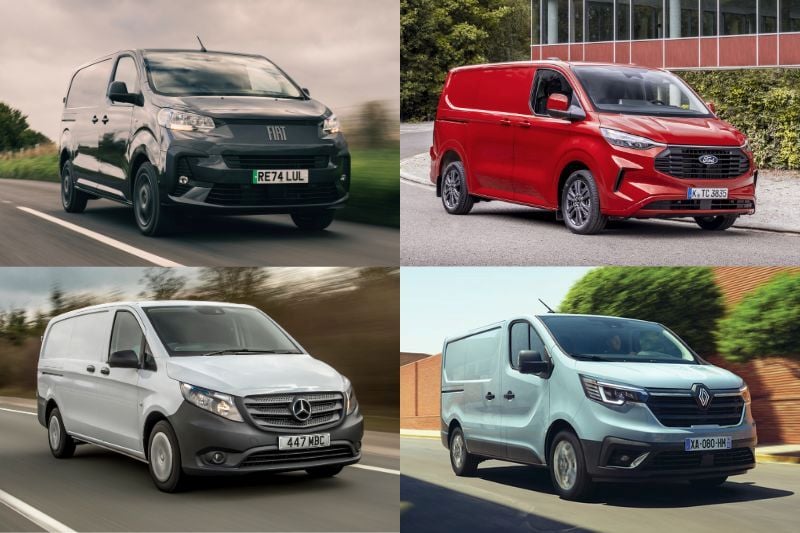
2025 Maxus eDeliver 7 Compared with Medium Van Rivals
|
|
|||||
|
Powertrain |
Electric |
Electric |
Electric |
Electric |
Electric |
|
Battery Capacity |
77kWh |
75kWh |
64kWh |
66kWh |
52kWh |
|
Max Power |
150bhp |
134bhp |
134bhp |
114bhp |
121bhp |
|
Max Torque |
330Nm |
270Nm |
415Nm |
295Nm |
245Nm |
|
Range [WLTP] |
198 miles |
230 miles |
206 miles |
160 miles |
197 miles |
|
Fast Recharge |
43mins > 20-80% |
45mins > 5-80% |
39mins > 10-80% |
35mins > 10-80% |
56mins > 15-80% |
|
Length |
5372mm |
5331mm |
5450mm |
5140mm |
5480mm |
|
Height |
1999mm |
1935mm |
1963mm |
1932mm |
1967mm |
|
Wheelbase |
3357mm |
3275mm |
3500mm |
3200mm |
3498mm |
|
Load Length |
2913mm |
2862mm |
3002mm |
2831mm |
2937mm |
|
Load Volume |
7.2cu m |
6.1cu m |
6.5cu m |
6.0cu m |
7.8cu m |
|
Maximum Payload |
1135kg |
915kg |
966kg |
783kg |
950kg |
|
Gross Vehicle Weight |
3500kg |
3100kg |
3225kg |
3200kg |
3070kg |
|
Towing Capacity (Braked) |
2000kg |
1000kg |
2000kg |
0kg |
920kg |
* Single example model used, comparisons with other vans may vary depending on specification
Lease A Maxus Van With Vansdirect
Leasing a new van with Vansdirect has never been easier and better value.
Get the right van at the right deal, fast and hassle-free with the best Maxus van leasing deals available across the Maxus eDeliver 3, Maxus Deliver 7 and Maxus Deliver 9 line-up
Speak to our expert team today and you could be driving a new Maxus van for less than you think.